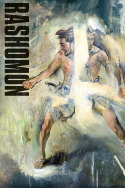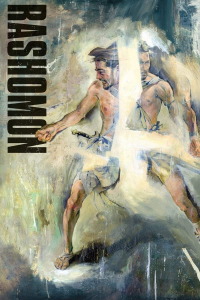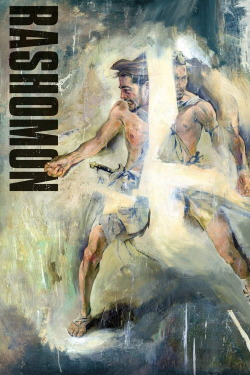
Review of Rashomon (1950) by Aaron S — 12 Jun 2010
When I was watching Rashomon, I was reminded of a Sufi fable: Two men appear before a judge to plead their case. After the first man makes his statement, the judge says "That's right." The second man makes his opposing statement, the judge says "That's right." Frustrated, the clerk of the court exclaims to the judge, "Both men can't be right!" The judge replies, "That's right.".
Rashomon is about the death of a man in a forest, either by murder or suicide. The event is told by multiple perspectives: a famous bandit accused of the murder, the man's wife, even from the murdered man himself as spoken through a medium (in a pretty chilling sequence.) This in turn is being related to an anonymous stranger seeking shelter from the rain (in the ruined gates of Rashomon) by two men who also offered meager testimony.
In a nutshell, a man traveling with his wife are ambushed by the bandit Tajomaru (played by Kurosawa regular Toshiro Mifune). Tajomaru, being smitten with the man's wife is determined to kidnap her. And somewhere along this chain of events, the husband ends up dead.
Those are really the only "facts" that are presented, because they are the only elements in each testimony offered that line up. Who killed the man and why varies from person to person. It's a mystery of Agatha Christie-like proportions, and there's no Hercule Poirot to sort things out.
My favorite aspect of this movie is that the characters? testimony is told directly to the camera, as if the audience were the magistrate that is mediating the trial. It's a pretty subtle way of letting the viewer come to their own conclusions, based on the nebulous and contradictory evidence given. All in all, the one message that finally stands out is "Everything is both true and false.".
This review of Rashomon (1950) was written by Aaron S on 12 Jun 2010.
Rashomon has generally received very positive reviews.
Was this review helpful?