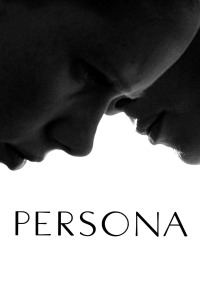
Review of Persona (1966) by Harpreet S — 12 Nov 2012
Could it be that the boy we see in the prelude of Ingmar Bergman's "Persona," caressing the blurry, changing images is a sort of a model of the son of Elisabet (Liv Ullmann) and Alma's (Bibi Andersson) aborted child? I had to view this film again four times to really offer a few of my thoughts.
The story concerns a nurse (Alma) taking care of an actress (Elisabet) who has become mute. I was a little worried about having a similar revelation as I had with "The Seventh Seal," but I seem to love "Persona" even more with repeated viewings, consequently understanding it better.
Why has Elisabet become mute? Of course we know that it's likely because of the terrors of the world: the burning of the monk she sees on television and a picture of the Warsaw ghetto are hints. But, I will point to a not so famous monologue (there are several great ones) in the film; it's where the doctor talks to Elisabet about "The impossible dream.
Not of seeming, but of being." I can be wrong, but I believe Elisabet is trying to purify herself by becoming silent: to not say any lies, to not commit any fallacies. This particular sequence I remotely understood only in my last viewing; before that I had no clue what the female doctor was talking about.
We all know the astonishing parallel sequence in the near end where Alma speaks of Elisabet's child, however I noticed other shots that can be considered similar, including one that recalls what the female doctor told Elisabet; it happens right after the boiling water part, where Alma again questions Elisabet's silence, she says: "Is it really important not to lie?" Some other minor alike shots I noticed where of Bergman's camera cutting to the hands of Alma and Elisabet when both are with the doctor at separate times.
Also, in the prelude we see a dead woman (possibly in a hospital), and almost for a second we see her eyes opens; this exact shot is replicated with Alma later in the film when she is in pain and suddenly opens her eyes.
Talking about the story would be spoiling it, but I must say there is not much evidence of Elizabeth being part of the transformation; it just seems Alma is becoming Elisabet, and most of what happens after Elisabet looks at the Warsaw photo happens in Alma's mind, possibly a dream.
Certainty is impossibility. Even though Bergman disliked Jean-Luc Godard's cinema, I will say that "Persona," while being an entirely original work does have attributes of a Godard; it's told in fragments, even some of the dialogues we can only guess what it is about, along with Bergman composing several different images to create an affect and intercutting images that disrupt the flow of a scene.
It's also an extraordinarily minimalist work: I've learned that the actors did not wear make-up, it uses only a handful of actors, the two leading ladies dominate the scope, and only Bibi Andersson speaks for the majority of the film.
I don't know if Godard or Kiarostami were influenced by Bergman, but there are specific shots that reminded me of Kiarostami, an example: Alma speaking to the doctor where we can see Alma's face and only hear the doctor.
I now understand the influence it had on "Fight Club," excluding the image of the erect penis. Ingmar Bergman's "Persona" is a film which you say it belongs to a category of the highest form of art.
It's a landmark in its narrative structure and technical achievements; look at how Bergman zooms in to the photo of the Warsaw ghetto, Bergman is able to take the viewer "inside" the picture and make us feel what the people are feeling or how when Alma secretly reads Elizabeth's letter, we cannot hear Liv Ullmann's voice, embodying her silence! Saying as much as you can is saying so little; there are several other masterful sequences that only you can see to believe.
I can't say I pay attention to the use of music in every film, but having seen "Persona" on a repetitive basis tells me that this is one of very best to orchestrate music into a specific image or scene.
An absolute, yet unattainable masterpiece!
This review of Persona (1966) was written by Harpreet S on 12 Nov 2012.
Persona has generally received very positive reviews.
Was this review helpful?