Review of Palindromes (2005) by Alesha B — 15 May 2010
If generating conflicting emotions in the viewer, largely ones that cannot be satisfactorily resolved, is what qualifies a film as a "masterpiece," and I happen to think that it at least somewhat is, then this film is one without doubt.
Rare is a film these days that can actually make you think; as in, re-evaluate your life philosophy, while you watch it and after it's over. I happen to think Palindromes is that film. And for full disclosure, I don't think Todd Solondz is a genius--far from it; Happiness remains my second least-favorite movie: a cheap cynical crack at anything optimistic, a "satire" bereft of cleverness.
It seems to be the film version of an abusive stepfather. Palindromes is different: yes, it deals with many "depraved" issues, among them pedophilia, pregnancy, obesity and religion. But here, the film attempts a coup, and succeeds.
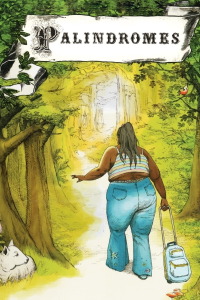
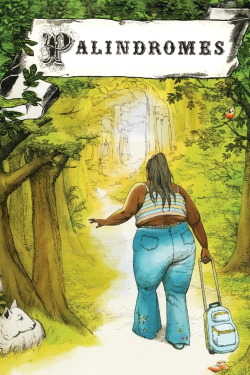
Eight different actors, of different size, race, and gender, assume the role of the main character, Aviva. The film's incredible focus on dialogue and scene allows this trick to slide by almost undetected; the constantly shifting performers remind us of nothing so much as our invasive gaze and the judgments that reside with it.
We are forced to confront that and render it neutral, and when we do that for Aviva, we really do it for all the characters. Solondz has finally found a way to make us think about his characters: by not being able to visualize them.
That and the fact that this is his least cynical film, although some may take it that way. It is certainly gloomy, but it doesn't seem to have given up on life. Unlike Happiness, where everything and everyone is in the gutter, this film blurs the line between "good people" and "bad people.
" Mama Sunshine is the character in the film, indisputably, who has done the most "traditional" good deeds, by taking care of orphaned or runaway children, all with disabilities (given Solondz' penchant for forcefully re-focusing physical depiction, this is one of the best and most heartfelt appearances of the mentally disabled in film I've seen).
But she is also a fundamentalist Christian, who bakes them Jesus tears and has them sing songs praising Dr. Dan--a man who later orchestrates the murder of an abortion doctor. The tangled and conflicting emotions one gets when trying to put Mama Sunshine on one side of the fence or another is telling of what Solondz is getting at, in strict antithesis to Happiness: instead of everyone being so obviously bad, maybe nobody is "obviously" bad.
After all, as Aviva says, "Pedophiles love children." She's not joking: she's been sleeping with one the entire film. The optimism may be too dark for some, but it's revelatory for others: the ability to find love anywhere, even in abuse--love as a defense mechanism.
After Happiness, I found this gorgeous, in the most pressing, critical, and heartbreaking ways. A must-see.
This review of Palindromes (2005) was written by Alesha B on 15 May 2010.
Palindromes has generally received positive reviews.
Was this review helpful?