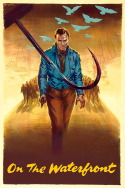
Review of On the Waterfront (1954) by Peter L — 26 Jul 2011
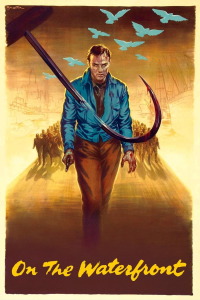
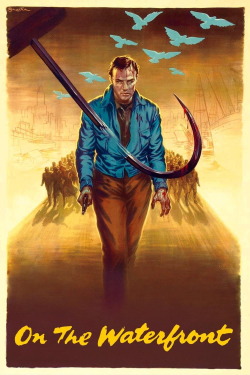
"I coulda had class. I coulda been a contender. I coulda been somebody, instead of a bum, which is what I am, let's face it." One of the all-time great American films, On the Waterfront exploded on a country shaken by the betrayals and paranoia if the anticommunist scare. Searing and tender, it ushered into Hollywood a new kind of hard-hitting social realism, not least because it was filled with indelible performances from a number of New York theater's hot postwar generation of naturalistic and Method actors.
Slow-witted but sensitive Terry Malloy (Marlon Brando, never more beautiful), a failed boxer turned longshoreman and errand boy for corrupt union boss Johnny Friendly (Lee J. Cobb), is disturbed by his unwitting role in the murder of a disaffected docker. His guilt is exacerbated when he falls in love with the dead man's sister, Edie Doyle (Eva Marie Saint in her film debut), but his illuminating crisis is his realization that he, too, has been sold out-most heartbreakingly by his older, smarter brother Charlie (Rod Steiger), who is Friendly's sharp lawyer and right-hand man. After Edie shames the initially ineffectual parish priest (Karl Malden) into leading the crusade against harbor union racketeering, Friendly's intimidation turns more deadly. Terry painfully defies the code of silence and testifies at a congressional commission. Despite doing the right thing, Terry is ostracized for "ratting" by the waterfront community and is beaten to a pulp in the dockyard before his fearful comrades fall in behind him, breaking Friendly's hold on their lives and labor.
The film was mostly visibly inspired by "Crime on the Waterfront," a series of newspaper articles by Malcolm Johnson exposing racketeering in the New York/New Jersey dockyards. Playwright Arthur Miller began working on a screenplay at the behest of director Elia Kazan. But when Kazan testified before the House Un-American Activities Committee, Miller broke with him. Kazan turned to a fellow "friendly witness," writer Budd Schulberg. Both men's reputations suffered permanent damage and On the Waterfront is frequently labeled their apology or defense. Kazan admitted he identified with Terry Malloy's conflict of loyalties. Wherever one's sympathies lie, the painful real-life background invested the film with a gut-wrenching, truthful emotional center for the realism of its subject and setting and for the naturalism of its performances (complimented by Leonard Bernstein's evocative score).
Terry confronting Charley in the back of a cab is the most often cited classic scene, but there are many other unforgettable moments: Brando fiddling with Saint's little glove, putting it on his own hand; Terry discovering that all his lovingly cared for pigeons have been killed by the neighborhood boy who admired him; Terry beating down Edie's door and forcing admission of love as they slide down to the floor in a desperate kiss.
Fifty years on it endures as an unflinching contemplation of betrayal.
This review of On the Waterfront (1954) was written by Peter L on 26 Jul 2011.
On the Waterfront has generally received very positive reviews.
Was this review helpful?