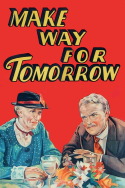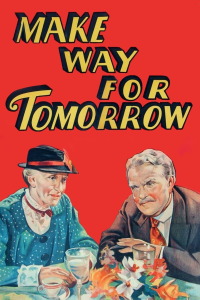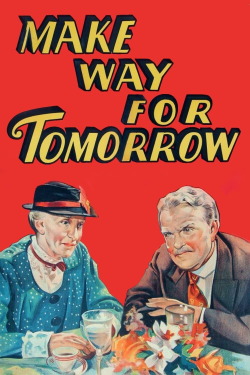
Review of Make Way for Tomorrow (1937) by Samir R — 10 Apr 2010
There are few movies that find a way to dispense with all that is unnecessary, to strip away artifice and reveal a painful truth transposed directly from one's mind and soul to the silver screen. Leo McCarey has here succinctly distilled so much of what it means to grow old, to love, to lose, to find disappointment, heartache and joy in the largest and smallest intangible bric-a-brac of life. The filmic style does not call attention to itself, does not resort to gimmicks or flashy attention-getting details. Rather the acute sensitivity and economy of the mise-en-scene and camera movement, the sense of calm and understanding in what McCarey allows us to see and hear (like the heartbreaking phone-call they share) of this charming old couple's tragic travails, bespeak the almost Zen acceptance by the main characters, of the world for what it is, and a bemused sadness at what that world and our families do with us once we have come to realize these truths.
It's amazing at how connected one's experience of watching the film is to the experience of the characters. As the Coopers meet strangers on the one day they have together in the city where they spent their honeymoon decades earlier, their love and devotion for one another touches each person they encounter, and creates multiple moments of transcendence for the viewer. Each encounter makes the cheesiest of platitudes, how the glow that true love casts brightens the world of those who come into it's proximity, come to vivid life. No one who meets them escapes this glow, even the car salesman who pegs them as an easy sale, feels no animosity that they had no interest in buying the car he drove them around the city in. He behaves as if he experienced a rare gift from having simply wandered in their presence. All this serves to paint the ending as one of the most excruciatingly painful in Hollywood history, and which the studio aggressively lobbied McCarey (unsuccessfully) to change. It also points up the sad truth that, often, elderly parents in need receive warmer treatment from strangers than from their adult children (retirement homes are mentioned as the most dire, depressing eventuality for the elderly). Whether you view the children as selfish or simply caught in an uncomfortable position depends entirely on you. But I saw them both ways, yet coming down hard on the selfish side, showing how far from the evolved perspective of the old Cooper couple I am. I'm amazed that McCarey managed to create such a film in the Hollywood system, and he was completely right when he chastised the Academy in his acceptance speech for awarding him the Oscar for "The Awful Truth" instead of this film.
If you watch this movie and shed not one tear, you have no heart.
This review of Make Way for Tomorrow (1937) was written by Samir R on 10 Apr 2010.
Make Way for Tomorrow has generally received very positive reviews.
Was this review helpful?