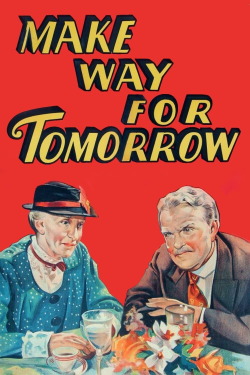
Review of Make Way for Tomorrow (1937) by Edith N — 21 May 2011
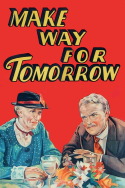
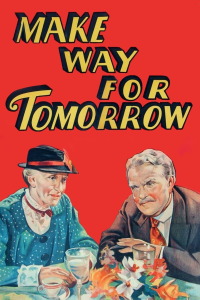
Aching, beautiful, devastating and ultimately haunting, "Make Way for Tomorrow" explores the clash between generations in a way no other film ever has -- and no other movie could hope to match.
Bark (Victor Moore) and Lucy Cooper (Beulah Bondi) are forced to move in with their grown children when the old couple's house is foreclosed upon. Despite years of seemingly tender care, they are unwelcome guests, Lucy merely tolerated by her son George (Thomas Mitchell), his wife Anita (Fay Bainter) and their daughter Rhoda (Barbara Read) and Bark treated like a prisoner by daughter Cora (Elizabeth Risdon).
Through carefully crafted dialogue and the actors' telling, meaningful movements, director Leo McCarey makes us note the inconvenience the old folks cause for the children and grandchildren. However, McCarey never turns us against his protagonists, who, despite having allies (including kindly but all-too-wise grocer Max Rubens (Maurice Moscovitch) in Bark's case and a room full of Anita's friends in Lucy's case) still cling to their love for one another and the hope they can live together independently once again. After 50 years of trudging through adversity, it almost seems like they will make it.
Unfortunately, master director McCarey can't let the audience off so easily; contra Lucy's words to Rhoda, we must "face facts." Circumstances necessitate moving Bark to California while Lucy will be confined to a nursing home -- a change both the couple and the audience knows will likely separate them for what remains of the pair's life. Knowing time is short, Bark and Lucy decide to skip a last supper with their children in favor of exploring New York City -- the site of their honeymoon five decades prior -- on their own. Their lovely time is made even richer due to the kindness of strangers, who see the goodness of the couple's hearts, in contrast to their often selfish progeny.
However, this seemingly beatific final act makes Lucy and Bark's final moments together even more heart-wrenching; it's made clear that their last six hours together have possibly been the highlight of the couple's life. The children, the very people who are supposed to be vessels of joy as one approaches the twilight years, deliver a harsh sentence, tantamount to death, that completely shreds the ideal of growing old together. Thus, McCarey forces us to pay the price for sharing the protagonists' last moments of pleasure by confronting us with their agony.
It's a stark warning to any children and grandchildren who don't have the necessary measure of perspective to see what the elderly have to offer the world. While some might say life is for the living and the earth belongs to the young, "Tomorrow" reminds us that the old are still living, and, in their hearts, they might have a shred of youth still remaining.
This review of Make Way for Tomorrow (1937) was written by Edith N on 21 May 2011.
Make Way for Tomorrow has generally received very positive reviews.
Was this review helpful?