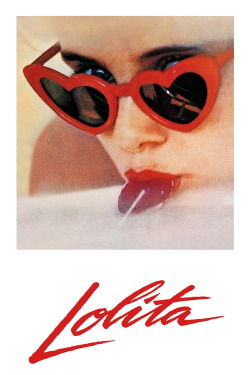
Review of Lolita (1962) by Julio C — 19 May 2012
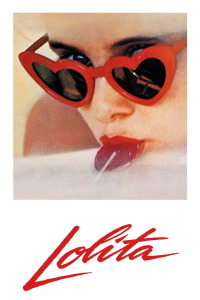
Kubrick said in an interview after Lolita's release, "Had I known what I would've had to cut out, I probably wouldn't of made the film." It's a surprising irony though that what had to be suppressed or changed from the book works to his advantage. Like other works under the master's belt, this has some comedy that is so dark that you almost (or do) feel guilty after laughing. The innuendo, even decades later, is still as provocative -- and when it gets disturbing, it doesn't go too far over the line. I have not read the book, but I have heard much about it, what was different, and I think Kubrick at least is most successful at infusing his trademark touches to the material.
For starters, there is the acting. The supporting actors are terrific. This is not to say that James Mason (Humbert Humbert) and Sue Lyon (Dolores "Lolita" Hayes) are not outstanding in their respective roles (in fact, I'd say this may be James Mason's best performance), but in looking at Peter Sellers in his multiple roles via the curious, insanely oddball Quilty, and Shelley Winters as Lolita's mother, they are simply brilliant. Right from the first scene, which happens to take the last scene of the story in place, Sellers doesn't have me for a second thinking that he isn't perfectly off-the-wall. As was in Dr. Strangelove, his contributions to the project are incalculable. Winters, on the other hand, finds that balance with Mrs. Hayes as a lonely middle-aged woman looking for companionship, though unable to shake her over-protective tendencies.
As for Mason and Lyon, their scenes together aren't at the least bit overtly melodramatic and at best helps define what the film is about. Mason finds the right notes, if a little anxiously and stuffy at times, in how Humbert is almost like a kid trying to break out of his middle-aged professor image. When he meets Lolita he's awestruck, and falls for her hard, very hard, which sets up what happens to the two of them for the rest of the film. What is even more interesting is how the dynamic is placed with Lolita, who is wiser in ways Humbert is not, and how the sort of idea of mutual youth is tempting, but definitely not everlasting. As the third act unfolds, the film becomes an intense kind of morality tale, where male insecurities are touched upon with Humbert, and even Quilty to a degree. Kubrick, being one of the finest of dramatic character psychologists, hardly skips a beat in making sure not to lose the strange bits (which must be some of the better bits in Nabokov's text) with humor.
Then there is the most rewarding thing of all in a Kubrick film, which is seeing how he photographs the scenes and characters. It holds some of the moves and angles and lighting he's held to for all of his career (some shots show as a precursor to Eyes Wide Shut), and how the camera stays on the characters in many scenes (actually, almost all the scenes) adds that right tension and space between us and them. If anything else, just watch the film for the sake of watching a film moving and staying put and capturing faces in particular ways. Some Kubrick fans may come to this after seeing the essentials like 2001, The Shining, and A Clockwork Orange, however in many ways, Lolita belongs in the conversation of his best work. It certainly is, for my money, as enticing and intriguing a sexual satire as I've ever seen.
This review of Lolita (1962) was written by Julio C on 19 May 2012.
Lolita has generally received very positive reviews.
Was this review helpful?