Review of Leviathan (2014) by Devilmath — 26 Sep 2015
After winning the Best Screenplay award at the Cannes Film Festival, and being chosen as Russia's official submission for the Academy Award for Best Foreign Language Film, Leviathan added yet another trophy to its showcase a few days ago. As BFI Fellow and President of the Official Competition Jeremy Thomas announced, the London Film Festival’s jury chose this Russian drama as winner of this year’s competition, commending its “grandeur and themes [which] moved all of us in the same way”. Another successful feature for Andrey Zvyaginstev, whose Elena already won the Special Jury Prize at Cannes in 2011. After premiering at many other important festivals (Telluride, Toronto, Vancouver), Leviathan is released in the UK by Curzon Cinemas without much clamour or hype. The cinematic season reaches its peak at this time of the year; as Christmas blockbusters and Oscar-hunting auteurs begin to seize screening rooms and star on every bus side and billboard, this ambitious but overlooked film will have a hard time getting the attention it deserves. And yet, despite not striking immediately as a crowd pleaser, this is more than just a film for sophisticated critics: it’s a deep and tragic reflection on human nature that everyone should consider watching.
Set in a Russian coastal town, Leviathan kicks off as a tense and dark political thriller. Nikolay (Aleksey Serebryakov) and his girlfriend Lilya (Elena Lyadova) live with Nikolay’s teenage son Roma; their stability is threatened by the greediness of corrupt mayor Vadim (Roman Madianov), who wants to build a conference centre on Nikolay’s land. The clash between the two ends up in court, where judges inevitably defend the vested interests of the powers that be. But Nikolay’s lawyer, handsome Muscovite Dmitri (Vladimir Vdovichenkov), has an ace up his sleeve: a secret dossier on Vadim. Will that be enough to make the shady politician desist? The preparation of the blackmail is one of the most unusual and satirically nipping sequences, not only in this film, but in the history of movie blackmails. Before finally taking the compromising documents to Vadim’s personal office, Dmitri goes all around town to try and press charges against the politician; the series of dismissive rejections or excuses he hears from various functionaries is a remorseless blow to Russia’s apparatus and enduring submission to power.
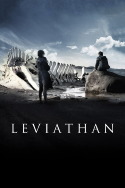
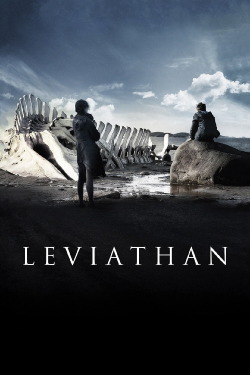
When Leviathan hits its peak of tension, the thriller progressively fades out to let the human drama grow. This destabilising trick might put off those who expect a climactic series of plot twists, but it’s necessary to accurately portray the unfolding of events and their impact on everyone involved. The relationship between Nikolay and Lilya, their friends, and Dmitri is very soon put to the test by the real-life repercussions of Nikolay and Dmitri’s insubordination. Their favourite pasttime, drinking, suddenly turns from comical to woeful; their camaraderie shatters, not only by Vadim’s hand, but also because of their human inadequacies. Although you’ll be hard-pressed to find a bleaker film this year, Leviathan’s social and human critique can’t be mistaken for simple nihilism. In one of its most vivid and symbolic scenes, Nikolay’s son Roma sits by the coast, worn out by his family’s unsurmountable decline; next to him lies the huge skeleton of a sea creature, a reference to the biblical and mythological leviathan that God shows to Job to prove the inscrutability of the divine plan. In Roma’s case, the higher power is much more earthly and unforgiving.
This review of Leviathan (2014) was written by Devilmath on 26 Sep 2015.
Leviathan has generally received very positive reviews.
Was this review helpful?