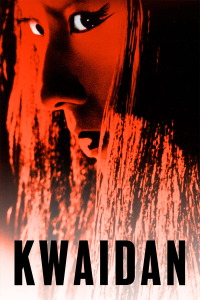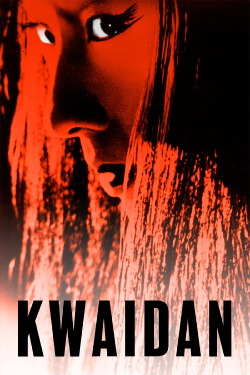
Review of Kwaidan (1965) by Harpreet S — 18 Dec 2011
It is widely accepted that Akira Kurosawa, Kenji Mizoguchi, and Yasujiro Ozu are the three greatest Japanese directors, at least to the non-Japanese. I just finished watching Masaki Kobayashiâ(TM)s âKwaidan,â? and I have to say he is not far behind! The other film of his I had seen was âSamurai Rebellionâ? starring Toshiro Mifune.
Even in âKwaidanâ? we have Kurosawaâ(TM)s favorites in Takashi Shimura and Tatsuya Nakadai. âKwaidanâ? means âghost story,â? and there are four stories in this film related to ghosts. I wonâ(TM)t mention what the stories are, but I will say that I donâ(TM)t think any other director could have made âKwaidanâ? as well as Kobayashi did.
I was really fascinated by each frame and each shot. The subtle camera movement, how a shot begins and ends. Kobayashi and his cinematographer Miyajima created several chilling sequences where the actors do not even say any dialogues.
There is one masterful sequence in the third story involving a manâ(TM)s ears, and it is one of the greatest sequences ever filmed! Also, the skies in the stories seem to have been painted. And, color is used to show the mood of a character or the situation.
I also admired the juxtaposition of paintings of battles with the events that occur in the third story. Besides the stories, I think it is an extraordinary showcase of Japanese music, costumes, and culture.
The film is based on Lafcadio Hearn's collections of Japanese folk tales, who oddly was a non-Japanese.
This review of Kwaidan (1965) was written by Harpreet S on 18 Dec 2011.
Kwaidan has generally received very positive reviews.
Was this review helpful?