Review of Knight of Cups (2015) by Calib M — 21 Mar 2016
What is an "experimental film"? According to Wikipedia, it's "a mode of filmmaking that rigorously re-evaluates cinematic conventions and explores non-narrative forms and alternatives to traditional narratives or methods of working." By that definition, the term would apply to most films made in the late 19th and early 20th centuries, the first films made when the sound era and color era each began - and practically every film made by Terrence Malick. The Oscar-nominated writer-director (and former MIT philosophy professor) has been making unusual and distinctive movies since the 1970s, off and on. The most productive and creative period of his career - the first two decades of the 21st century. The drama/romance "Knight of Cups" (R, 1:58) - probably the most experimental in Malick's filmography.
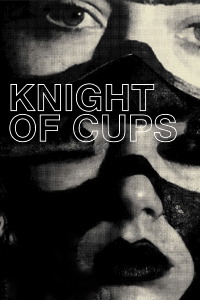
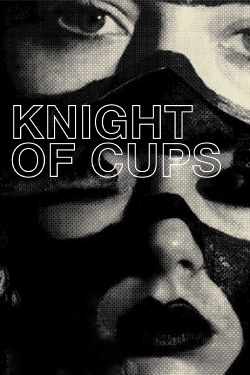
The title refers to one of the Minor Arcana cards in tarot decks. That tarot character is known as being "constantly bored, and in constant need of stimulation, but also artistic and refined. He represents a person who is amiable, intelligent, and full of high principles, but a dreamer who can be easily persuaded or discouraged." (Thanks again, Wikipedia!) This is an apt description of the film's main character, but he is pictured on the movie poster upside-down, which, to a tarot card reader, "indicates fraud, false promises and trickery. It represents a person who has trouble discerning when and where the truth ends and lies begin." Writer-director Terrence Malick's film is also partially inspired by John Bunyan's 1678 Christian Allegory "The Pilgrim's Progress", in which an imperfect man seeks redemption, and also by the ancient Syrian "Hymn of the Pearl" in which a young man is sent by his father (a king) into a foreign land to retrieve a rare pearl, but the prince forgets who he is and why he came there.
Christian Bale is Rick, a screenwriter who drifts through his life (and a series of romantic relationships) in his current hometown of Los Angeles and during a trip to Las Vegas. He is reasonably well-off, he often has beautiful women keeping him company and he goes to fancy clubs and parties where we sometimes see famous real-life Hollywood celebrities playing fictional Hollywood celebrities. We occasionally see Rick smile and appear to have fun, but it is clear that he's not really happy. He feels like a stranger in his own life, he has regrets (including a family tragedy and where he stands with previous lovers, played by Oscar winners Cate Blanchett and Natalie Portman) and he has challenging relationships with his brother (Wes Bentley) and father (Brian Dennehy) who show up several times in the film. A few brief, but dramatic events and personal confrontations take place in Rick's life, but except for isolated significant moments, not much "happens" during the course of this movie... at least not in the usual sense.
That last paragraph is my description of the closest thing this film has to a traditional story. There is very little in terms of a plot, and the movie has no script, per se. The scenes were mostly improvised, which at times included Malick sending characters into a scene with no prior warning and continuing to roll as his actors interacted with the new people. Malick gave the supporting actors internal monologues to study for their scenes but Bale received no lines at all before or during location filming. Much of the conversation in the film is secondary to background noise or to the music that makes up the movie's score. Most of the time we hear the actors speaking clearly, the words represent their thoughts regarding Rick, but there are also some lines from those earlier works that inspired this examination of life. The film is divided into eight chapters, most of which are named after different tarot cards that symbolize the person in Rick's life who is the focus of that chapter. The visuals, courtesy of Oscar-winning cinematographer Emmanuel Lubezki, consist mainly of following Rick around and observing the myriad emotions displayed on his expressive face. There are also frequent POV shots and a wide variety of symbolic images. With all these ingredients in play, it's no wonder that the editing took two years.
"Knight of Cups" is an existential journey unlike any you've probably seen before. Incorporating ancient literature with a modern story and music reminds me a little of Spike Lee's brilliant "Chi-Raq" (2015). I'd have to say that "Chi-Raq" was more entertaining and varied, but "Knight of Cups" is deeper and more relatable to a wider variety of people. You don't have to be a Hollywood writer to understand and identify with Rick's struggles regarding family, romance, work, and getting a firmer grip on his sense of self. You may even hear some of your own feelings about your life represented in the film's voice-overs. In the end, this is a movie about learning to come to grips with your past, being happy with your present and remaining hopeful about your future. Malik's experimental style usually isn't to my taste, but the more I learned and thought about this film, the more I liked it. "A-".
This review of Knight of Cups (2015) was written by Calib M on 21 Mar 2016.
Knight of Cups has generally received mixed reviews.
Was this review helpful?