Review of In a Lonely Place (1950) by Stella D — 16 Aug 2011
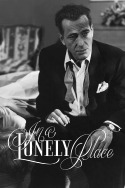
Y'know what are the most painful moments in the film for me? The scenes where Dixon realizes what he's done, and tries to make up for it, or somehow deal with it. You learn that he's not thoroughly bad, just someone who in times of stress is capable of doing extremely bad things. The humanity comes through clear, without once apologizing for the man.
(SPOILERS) I have a totally different reading on book and film. I thought the book a well-written example of the genre (no Hannibal Lecter cutesiness here) but when Ray translated it into the big screen he did something altogether different: he ditched the serial killer angle, turned it into a more grounded drama. Maybe it's a condition of the times, but serial killers just don't do it for me anymore; they're cartoon villains, an easy answer when asking questions about the nature of evil (it's like Ultimate Evil is supposed to be Heath Ledger in clown makeup--can be unsettling for oh, ten minutes, then you want something more substantial).
Funny how Ray turns proof of Dixon's innocence into a moment of high tragedy--not an easy feat, I would imagine. I admit, you do lose the intensity and terror, but for me making him NOT guilty is ultimately more unsettling. "Serial killer" would have been an easy answer for what he does but for Ray he's just a man who has to live with himself and what he's capable of doing--and I say that's a harder fate to deal with than life in a mental hospital dungeon decorated with plexiglass. "Sunset Boulevard" for all its pleasures, is a portrait of a grotesque; "In a Lonely Place" the monster is recognizable, he can be any of us--in fact he's exactly like someone who used to be close to me.
This review of In a Lonely Place (1950) was written by Stella D on 16 Aug 2011.
In a Lonely Place has generally received very positive reviews.
Was this review helpful?