Review of Ikiru (1952) by Srinjoy C — 04 Jan 2009
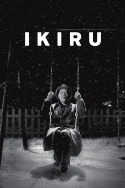
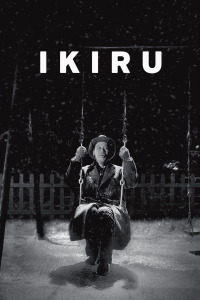
FOR a varied and detailed illustration of middle-class life in contemporary Japan, with a good deal of caustic social comment and extra thick sentiment thrown in, Akira Kurosawa's "Ikiru" ("To Live"), which opened at the Little Carnegie yesterday, is the best of the series of Japanese films that Thomas J. Brandon has shown at that theatre in the last several weeks. It is also the most expressive in its cinematic style, and if it weren't so confused in its story-telling, it would be one of the major postwar films from Japan.
As it stands, it is a strangely fascinating and affecting film, up to a point?that being the point where it consigns its aged hero to the great beyond. Then the last third (or forty-five minutes) of it is an odd sort of jumbled epilogue in which the last charitable act of the deceased man is crudely reconstructed in a series of flashbacks that are intercut with the static action of a tedious funeral.
The essential drama of the picture is that of an aging widower, a petty government official who has done nothing but shuffle papers and pass the buck for thirty years. Then, on the shattering discovery that he has cancer and has only a few months to live, he fearfully and frantically endeavors to make up for all the life and gratification he has lost.
In company with a disenchanted novelist, he tours the fleshpots of Tokyo, seeking joy in girls and liquor. That doesn't do any good. Then he tries to arrange for a calm retirement with his much adored son and daughter-in-law. They misunderstand his dilemma and rebuff him, which breaks his heart. A poignant attempt to have a friendship with a cheerful young woman does not succeed. Finally, he turns to a project of civic improvement that has been held up by government red tape for years, and it is upon this that he is working when he dies.
If the drama were clearly completed in continuity, it would be a proper progression to a climax with character and force. For the pathos of loneliness and searching in a friendless and meretricious world is brought out with vivid illustration in the first two-thirds of this film. And the idea of misunderstanding and callous disregard for other men that is the charge brought against the government officials could be continued to a straight ironic end.
It's that long-drawn, funereal maundering by the dead man's family and dull associates, all of them drinking and talking and showing their pettiness, that is the anti-climactic death of the film.
Even so, in this flat phase, Kurosawa often flashes that cinematic style of sharp reportage and introspection of his characters that distinguishes his film. He patiently studies his people, gives them plenty of time to move and surrounds them with rich and meaningful details in composing the comment of a scene. As a consequence, you see more human nature and more Japanese customs in this film?more emotion, personality and ways of living?than in most of the others that have gone before.
Particularly does Takashi Shimura give a deep and exhaustive notion of a man tormented by frustration and the dread of approaching death. Unquestionably, Shimura, who was the woodcutter in "Rashomon," measures up through his performance in this picture with the top film actors anywhere. Miki Odagiri as the girl he seeks as a companion, Nobuo Kaneko as his unfeeling son and Yunosuke Ito as the novelist are also remarkably good.
Although the English subtitles are somewhat pallid against the bottom margins of this black-and-white film, they are generally decipherable and sufficient to convey the thought of the Japanese dialogue.
This review of Ikiru (1952) was written by Srinjoy C on 04 Jan 2009.
Ikiru has generally received very positive reviews.
Was this review helpful?