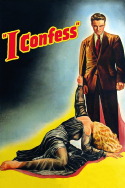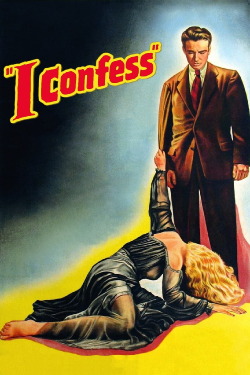
Review of I Confess (1953) by Matthew D — 25 Jul 2018
There is a lie almost all fictional mystery films and stories tell us, that motive is important to building a case. In the real world the police try to not use motive at all, it is easy to think of reasons for a person to commit a crime, reasons do not constitute evidence and any real reason could be as likely as any invented one.
I Confess is not the first film, nor even the first Hitchcock film, to continue this lie, but in it is one of the most egregious abuses of this myth of the motive (juries may think of their own motives, prosecutors point to them as accusations, but good detectives do not reply on them and judges do not allow them as evidence).
The film has some other problems; the second act is rather dull, missing the suspense of the first and third, and the source of intrigue is convoluted. However, the saving grace is Montgomery Clift as a tortured soul afflicted with impossible moral quandaries.
He plays an introverted man who struggles to express himself and is unsure when he should speak up, but who often hopelessly expresses his emotions on his face. As an introvert myself it's rare to find the hero of a story portrayed as such a positive type of introvert, usually films present us as untrustworthy for hiding our thoughts, and even if charitable they would rarely be cast as a handsome, heroic man as Clift.
This review of I Confess (1953) was written by Matthew D on 25 Jul 2018.
I Confess has generally received positive reviews.
Was this review helpful?