Review of Hoosiers (1986) by Edith N — 11 May 2009
[i]Hoop Dreams[/i] did not break the Oscars. [i]Hoop Dreams[/i] showed how the Oscars were broken. There was an enormous outcry in 1995, when the Oscar nominees were announced. Both Siskel [i]and[/i] Ebert placed the movie at number one on their best-of list of the year. Essentially every critic in the industry did. The documentary made a lot of money in addition to all that buzz. I'm pretty sure my little sister's English class actually got hauled off to see it. It was a big, big deal. Many people (Siskel and Ebert!) were hyping it as a Best Picture nominee. It didn't get it. Best Documentary? Not even nominated. Rumour spread that the documentary committee thought it was just too long--and it is long; it's nearly three hours. There are all sorts of other explanations involved, including the idea that, were it nominated, it would win (this is a problem why?), but generally, it was considered a great failing of the system. And so, after great hue and cry, the whole system was revised.
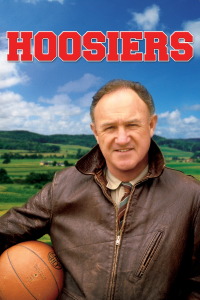
[i]Hoosiers[/i], on the other hand, wasn't so highly honoured by critics. Oh, it was never considered a bad movie. It's the story of a plucky underdog school with a washed-up coach (Gene Hackman)--and his alcoholic assistant (Dennis Hopper, clearly playing against type!) It's not a very good telling of the true story, but the true story isn't as interesting. Frankly, neither is this--it's the same sports story we always see. Plucky underdogs come from behind to win. The amazing part of [i]Hoop Dreams[/i] is how it subverts the trope, changing the story from what we've all grown up knowing. Oh, yes, the boys are underdogs, all right. They've from the Cabrini-Green housing project in Chicago. They get recruited to a suburban Catholic school, a 90-minute commute each way, for the express purpose of helping the school win basketball games. Things do not really go according to plan for either boy--neither one, it turns out, ever even got to the NBA.
It's funny how dominant sports movies are, given that most of them have the exact same plot. We know from the second that Gene Hackman enters that tiny school how things are going to end. When we meet Dennis Hopper, we know he's going to dry out. When we are told that one of the boys (I am incapable of telling them by name) won't play basketball because he was close to the old coach and resents the intrusion of the new one (were they just not supposed to have a team after the old one died?), we know that he will join the team after all. The townsfolk who question the methods of the new coach will fall in line after the team starts winning--and the team [i]will[/i] start winning. What's more, for all Jerry Goldsmith was a fine composer, the music here sounds like it was done on a Casio. (And [i]it[/i] got an Oscar nomination!).
On the other hand, there is [i]Hoop Dreams[/i]. Now, I didn't like it as much as Roger, I'm afraid. However, I will freely agree that the story is amazing. For one, it gives a lot of time to the idea that basketball isn't enough, and not just because the boys stop finding it fun as the movie goes on. William Gates takes the ACT five times before he gets a high enough score to get into the college offering him a scholarship. (No, I can't tell you what [i]my[/i] score was; I didn't take it. Just the SATs, which aren't even mentioned.) He suffered several major injuried, which blessedly were covered under the school's insurance. On the other hand, Arthur Agee came nearer the state championship than Gates--after having been kicked out of St. Joseph's because he couldn't make the small amount of tuition he was charged. (There is widespread belief that, had the school had more faith in his skills, the money would have been found.) Both boys have had someone they love, someone who appeared in the film, murdered--Gates's brother and Agee's father.
Things are happier for fictional people, it turns out. [i]Hoosiers[/i] is set in peaceful 1952 Indiana. There's no problems with race, and of course rural poverty is not the same as urban poverty. Oh, Dennis Hopper's a drunk. But no one's selling crack where the boys practice. [i]Hoosiers[/i] is how we romanticize sports. [i]Hoop Dreams[/i] is what, in many cases, sports can really be like. This all by itself is, to me, part of what makes [i]Hoop Dreams[/i] so much better.
This review of Hoosiers (1986) was written by Edith N on 11 May 2009.
Hoosiers has generally received very positive reviews.
Was this review helpful?