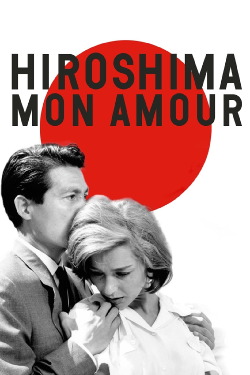
Review of Hiroshima Mon Amour (1959) by Todd J — 19 Jan 2008
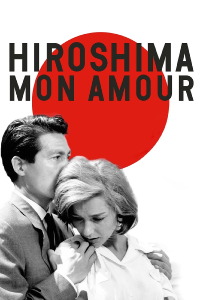
Alain Resnais directs what is quite possibly the most influential of the French New Wavers as far as enduring cinematic innovation is concerned. Of course, the innovations made here aren't repeated in popular film per se, but when the ways in which this film uses fleeting flashbacks and a by the moment, spread from the center narrative are still being called "inventive" in modern flicks like Memento, it's hard to underscore the advances that the film helped make.
Of course, technical innovation is not all to be said about it. What I find perhaps more engaging than anything is the way in which the film manages to address both the personal and the political side of World War II's aftermath without becoming sobby, overemotive, or overbearing with its combining of these two elements.
Somehow, Resnais and screenwriter Marguerite Duras place two characters into greater terms without sacrificing, for even a second, the integrity of the characterizations. Yet, through that narrative, the film addresses the emotional rip after the war and even manages to place all of these emotions into one large, all-encompassing frame: the inevitability of forgetfulness.
How can we forget the horror of Hiroshima? A lost lover? A family? A cultural legacy? Well, due to the film's concentration of filmic answers to these questions (in one particularly affective scene, the young French woman walks through a Hiroshima museum, looking at photographs of the aftermath.
..and of course, the film itself, in part, serves as a document of the war), it's fairly safe to say that nothing will be completely lost to the unintentional decay of memory. Then again, can photos really make us feel these things? Can my feelings of revulsion and horror at the sights of Hiroshima really pay any kind of justice to the thousands of dead and mutilated? That said, the film also concerns itself with a tangible, compelling narrative from which everything else flows, that narrative being about an affair between a Japanese businessman and a young Frenchwoman with a vague past.
These scenes are full of the light, seemingly whimsy but completely devastating implications that wannabe New Wave directors like Wes Anderson or Sofia Coppola could only dream of being able to understand, let alone put to film.
The famous cafe scene in which the two drink while unraveling backstory against the backdrop of neon, vibrant Hiroshima, also says a great deal about reconstruction (which, in Japan, is perhaps the most dramatic of anywhere after the war) as we have two characters relating about the scars that the war has left while uninhibited and successful progress goes on as a result (or a side-effect) of the daily atrocities being left behind.
And with all of that said, the film remains optimistic, examining both the explosion of production out of Japan and the cultural comingling that occurred in great amounts after the war. Although it's little more than a wannabe academic keyword now, globalization is certainly a key facet of this flick, but with everything else piled upon it, predicting the future is just one trick in this film's wide and deep bag.
What else could you ask for? ***** out've *****.
This review of Hiroshima Mon Amour (1959) was written by Todd J on 19 Jan 2008.
Hiroshima Mon Amour has generally received very positive reviews.
Was this review helpful?