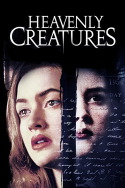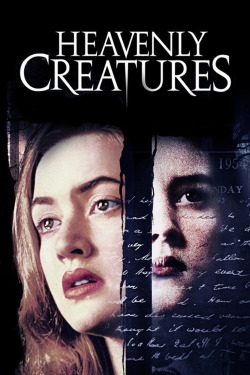
Review of Heavenly Creatures (1994) by Russell N — 25 Aug 2008
We begin with newsreel footage of idyllic 1950s Christchurch, New Zealand, with lake rowers, colorful gardens, and well-to-do men and women cheerfully tottering about town.
Then come the screams, amplifying until we cut to a steadicam shot running through trees, then to a house where a woman emerges to see investigate the noises. She sees teenage girls Juliet Hulme and Pauline (Reiper) Parker emerge frantically from the woods, covered head-to-toe in blood. "It's Mummy! She's been terribly hurt!" shouts Pauline. Meanwhile Juliet nearly collapses in desperation, crying "PLEASE! HELP US!".
This is the opening of Peter Jackson's shocking, extraordinary film which effectively blends modern drama with fantasy and visceral horror. It's the gateway project that evolved Jackson from an inventive low-brow horror director (Bad Taste, Dead-Alive) to the premiere auteur of "Lord of the Rings" and "King Kong." Speculate all you want about others, but he is this generation's Spielberg, a visionary filmmaker with ambition, depth, and a musician's ear for pacing. (One only wishes Sam Raimi of "Evil Dead" fame could have blossomed the same way).
The film tells the tale of two 15-year-old girls, the socially awkward Pauline Reiper (a shy, chubby Melanie Lynskey) and the new girl in town-- frenetic, bipolar, and incorrigibly imaginative Juliet Hulme (an intoxicatingly charismatic Kate Winslet, in her debut). They're polar opposites, Pauline dreadfully timid and Juliet vivacious and without boundaries. It's precisely why they become inseparable and form an unhealthy codependency on one another, particularly since they lack other friends. Spending late nights dreaming up fantasy worlds and role-playing lascivious engagements with famous singers and movie stars, the girls become utterly ensconced in a world of pure illusion that no one-- especially their parents-- can tap into.
Jackson takes this material and goes after it with full steam, complete with dazzling visuals like enormous butterflies, full-motion clay figurines, and CGI facial morphing-- all the more impressive in 1995, when CGI was just beginning to surface in cinema. But it's just as impressive to see Jackson carefully weave these innovative effects into a tale of adolescent jealousy without falling to the temptation of reverting back to horror/fantasy. Not once does he show an effects scene where we lose tone of the story and feel like something is funny or gross for the sake of being so.
It's precisely why this film works, and why the startling conclusion is so deeply disturbing. We know every element of terror is just fantasy until we encounter the real thing. And when it happens, we see it exactly the way Pauline and Juliet did. Horrifyingly. Here, murder is truly horrific in ways most of us would never want to experience in real life.
This is one of those films I viewed without expectations, but discovered I couldn't turn my eyes away from it. I found myself fully alert, holding my breath, keeping my jaw from dropping throughout its 100 minute running time. The rigorous pacing by editor Jamie Selkirk, sparkling photography by Alun Bollinger, a spellbinding score by Peter Dasent, coupled with Fran Walsh/Jackson's gutsy script and Jackson's energetic camerawork, instantly made me a fan of rogue art-house cinema. It couldn't have pleased me more to see Winslet move on to become a star and Jackson earn an Oscar for "The Return of the King" a decade later.
I recently saw the unrated extended cut on DVD, and I recommend the original version. The addition of several scenes, particularly ones where Pauline imagines gory ways to off her parents, do precisely what I felt the first cut restrained from doing. The original version is best because it takes itself seriously.
And it ought to, because the crime, while fascinating, is no laughing matter. It's shocking, tragic, yet in many ways completely understandable. We spend a few hours getting drawn into the world of young Pauline and Juliet, and we can totally see how they've gotten seduced by their own spell. Jackson shows us how an untamed imagination can be vast, menacing and even deadly. Roger Ebert describes the climax as "a mob of only two people where each is waiting for the other to yell stop." He's absolutely right. Here, the terror lies in the blood on our hands, and our inability to stop the inevitable from happening.
It's a thinking man's horror movie, a thriller of spectacle, and a dramatic tour de force.
This review of Heavenly Creatures (1994) was written by Russell N on 25 Aug 2008.
Heavenly Creatures has generally received very positive reviews.
Was this review helpful?