Review of Harlan County U.S.A. (1977) by Ruben C — 30 Oct 2013
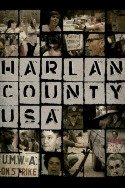
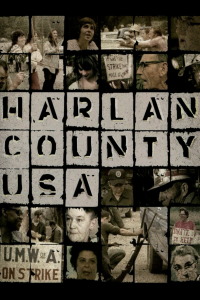
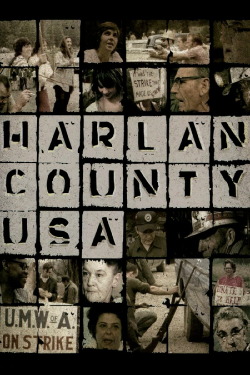
Ever since humans realized the existence of human rights, struggle against inequality and fight for rights have never been ceasing. Harlan County, USA, an Oscar-winning documentary film directed by Barbara Kopple, documents an effort of the coal miners and their wives against the Duke Power Company to fight for their future during the "Brookside Strike" in Harlan County, Kentucky in 1973.
The coal miners went on strike after the Duke Power Company, the owner of the Brookside Mine, refused to sign a standard U.M.W.A. contract which agreed the miners to join the U.M.W.A. (United Mine Workers of America). The strike lasted more than a year and the film documents the dire straits of coal miners, the picketing, the confrontations, the shootings, the murders, and the efforts to unite and organize these coal miners and members of women's club (the organizations of miners' wives).
About one month after the strike began, the wives of miners started a women's club to organize the wives who concerned about the safety of their husbands and were willing to take actions in support of the striking miners. These women raised funds from car drivers for the strikers on street car to drive to; they stayed on the picket lines with the miners; also, they tried to stop the scabs as the miners did. These women were just as important as miners during this strike in this film.
After striking for nine months, these miners picketed in front of the stock exchange in New York City, spreading the news of the Duke Power Company and appealing to people to not buy its stock. And in this section, Kopple documented a discussion between a miner and a cop. While this miner thought himself "get paid really good" though the working condition was terrible, the cop was shocked and boasted of his higher pay, union's health plan and early retirement benefits while doing a much more secure job. As it indicated, the miners were in situations even worse than they thought. In these scenes, the audience can find that these miners and their families spread out newspapers and hanged placards on their necks, which wrote "Don't finance Duke Power's Gun", "What does it take to move duke poet's heart " and etc to show the public the poor situations the miners suffered and how greedy and inhuman the company was.
Besides these miners and their family, the U.M.W.A. also played a significant role in Harlan County, USA. Joseph "Jack" Yablonski, a passionate and populist union representative loved by many of the miners, and his wife and daughter were murdered. And later in film, W.A. "Tony" Boyle, another representative who was more likely to make money from the miners' misery, convicted Yablonski murders. Yablonski was of course not the only victims during the process of striving for rights, a young man who left a 16-year-old wife and a five-month-old daughter, Lawrence Jones was shot in head. Fight for rights could never be easy. If the coal miners wanted better future, however, they had to take tireless efforts and overcome all the difficulties during the fighting process.
Throughout Harlan County, USA, Kopple used figure expression and movement elements of mise-en-scene to show the audience the struggles, pains, sufferings, angers and determinations of the miners and their wives. For instance, at 01:05:15 of the film, after being beaten up in Brookside Pocket line, miners and the women's club members organized a meeting. Lois Scott, a member of women's club, sitting on the seat with tears in her eyes, continued to raise and put down her arms to imitate what those "scabs" did, turned her head around to tell everyone the brutality of scabs while describing, and soon after, could not help standing up and leaning forward; her cheeks flushed, face contorted to fury-her nostrils flared, eyes flashed and soon closed into slits. Then she smashed her fist on the table and repeated the sentence "I'm sick of it." loudly while sitting down. And her eyes sparked with ferocity when she said "It's time for us to stand together and get just as violent as they are." Most of these expressions, such as her standing-up, forward lean and contorted face, show how angry she felt about being rudely treated by scabs. The audience can also figure out her determination to defeat these scabs and get rights, through the repetition of words, and her pain about current situations, through the glistened tears in her eyes. Hence, the mise-en-scene aspect of filmmaking successively depicts the thoughts and reactions of these workers and their wives to show the audience their determination to gain the rights.
Besides, the music element of sound, used by Kopple in Harlan County, USA, provides the audience with more information while it bestows more than the typical boring news interview with miners on strike. For example, at 00:42:00, after showing some fragments about the speeches of W.A. "Tony" Boyle and Joseph "Jack" Yablonski in 1969 election of UMWA, the music was on. The lyrics of the song, "Clarksville, Pennsylvania, is not too far from here. Coal miners were hoping for a brighter New Year. But for Jock Yablonski, his daughter and wife, the new year brought an ending to their precious lives. Well, it's cold-blooded murder, friends. I'm talking about now who's gonna stand up and who's gonna fight. You better clean up that union put it on solid ground and get rid of that dirty trash that keeps the working man down" reveals what exactly happened to Yablonski family in a more interesting way than boring interviews. Moreover, the lyrics also reflect the thought and hope of miners-a clean union which could keep their rights, and meanwhile amplify amount of sentiment in the audience's minds. As it indicates, the sound aspect of filmmaking helps the audience get more information in a more vivid way.
Harlan County, USA, argues that it is hard for the coal miners fight for their rights, and this kind of fight is ceaseless; these labors must go on struggling and striking. Likewise, Gary Crowdus wrote in "Harlan County U.S.A":
It is scenes such as these which convey the film's final message that, even with a reform union, the situation of the coal miners (and, by implication, all working people in America) is one of continuous, protracted struggle to defend and advance their interests. Most importantly, however, HARLAN COUNTY U.S.A. provides us with a stirring, heroic portrayal of working people struggling for the fundamental rights of organized labor. It is an inspiring portrayal precisely because it demonstrates that common American people like those in Harlan can organize and wage a successful political struggle - a struggle that one day may involve a bid for political power itself.
As I see it, Harlan County, USA is an interesting documentary. Since the director, Barbara Kopple spent four years with the family depicted in the film, the details of the film are fantastic. And the history footage along with traditional labor songs makes the film more interesting. The vivid depictions of the poor working condition in a coal mine and the disease miners suffered from, and the thesis about fight for right all attract me a lot. Harlan County, USA is a great documentary and not to be missed by those by interested in American labors, coal mining industry and human rights.
This review of Harlan County U.S.A. (1977) was written by Ruben C on 30 Oct 2013.
Harlan County U.S.A. has generally received very positive reviews.
Was this review helpful?