Review of Fritz the Cat (1972) by Liam G — 04 Mar 2009
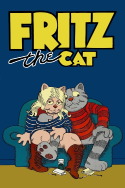
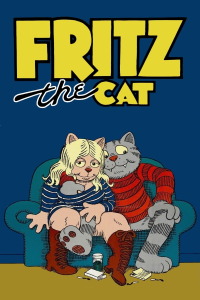
Sometimes, a good thing can go misunderstood. A piece of its nature, perhaps its full nature in some cases, can find itself misread by society in a manner its creator did not intend. Usually, that misreading manifests itself in putting the subject in a negative light, shrouding it in some form of controversy (of any possible size) that may continue to fester for many a year to come. Released in 1972, "Fritz the Cat" is one of several films on a list of those that have been deemed devastating to the entertainment industry for an unjust reason. Truly, "Fritz" is one of those films that can not find itself appreciated unless one gets the point of it. And if you do, then you'll see that Ralph Bakshi has created not only perhaps the most controversial piece in the history of American animation, but also one of that history's most underrated gems.
Set in 1960s New York City, Fritz the Cat, the titular character of the film, is a young college student living a life of partying and trying for the chance to bop any pretty young girl he lays an eye on. After tricking three girls to following him to a friend's apartment (where a drug party is taking place) for a group fling, Fritz finds himself (as well as everyone else present) busted by the cops. After a narrow escape, Fritz decides to dedicate himself to seeking "the truth" and discover what the meaning of life is, thanks to having been exposed to marijuana at the party earlier. On his journey, he encounters race relations with black crows in Harlem and gets involved with a movement concerning extremist revolutionaries.
Most people were so disgusted with the film when it was first released, and the view is largely unchanged today. In truth, it isn't hard to see why, as the film contains some graphic (especially for its time) depictions of violence, drug use, nudity, and sexuality, as everyone was so accustomed to the safety of Disney's films. (Indeed, even "Fritz"s visual style is on the gritty side.) However, what people don't get is that the film is a direct satire of 1960s culture--especially on the youth front. And given that particular decade, would we expect anyone back then who was of Fritz's age to have acted with more refinement? Surely not. That decade found revolutions and changes happening in every corner and on every spectrum of American society, which is what Bakshi has depicted here. Given that we were a country so socially divided at the time, the film does not seem to come off as a crude satire of the period, but rather a somewhat startlingly accurate documentation of it. As such, the film is in fact quite clever and a spark of genius, and is as original and creative now as it was then. "Fritz the Cat" is one of those films that you'll hear about when you bring its name up, and you'll be so intigued (believe it or not) by what you hear, that you may find yourself trying to peek in on it, just to discover for yourself what the fuss is about. Does that mean you'll end up enjoying it? Not really. You can still hate it for what it contains. But it doesn't hurt to try to read between the lines and understand the film beyond its surface. Perhaps it's the reluctance for the world to do just that, that puts the film in such an undeserving bad light. Regardless of the opinion, the film is undoubtedly a smart one, and deserving of the relatively small cult status it holds. No one with an interest in American animation is truly educated in its history until they have included "Fritz the Cat" in the list of material they've witnessed.
This review of Fritz the Cat (1972) was written by Liam G on 04 Mar 2009.
Fritz the Cat has generally received mixed reviews.
Was this review helpful?