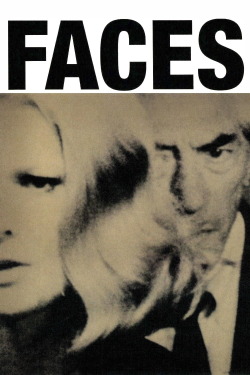
Review of Faces (1968) by Matthew S — 21 Oct 2013
Cassavetes' first endeavor into the world of marriage, with his second feature film, yielded a humane glimpse into the lives of two impossibly unhappy people who think they understand happiness. The husband believes he understands that a fourteen year marriage, security, and repetition makes for an unhappy person, and so he leaves his wife in the middle of the night to fall into the arms of a younger woman.
The wife believes she is happy already, and though shocked by her husband's request, knows to find it elsewhere while she still can. Both of them journey back into the night to find people to give them their satisfaction, their happiness, but sadly they both find that the crumbling of a decade long marriage does not relinquish them from one another.
What comes of the wide scope and interesting subject matter covered, is a film that speaks about how uncomfortable we all are when we're placed in our separate boxes, and how happiness is relative and finite.
The camera follows each of them as they find others to spend the night with. Richard (Marley) falls back in with a group of people who think they're completely different than anyone else, and have found happiness in greed, sex, and wealth.
Jeannie (Rapp) finds appeal in alcohol, being out with other women, and youth. Both husband and wife believe that being with someone younger predicates happiness, and that decision proves fatal to one and heartbreaking to the other.
Cassavetes made a film that is ungodly uncomfortable to watch from beginning to end. It is the epitome of people going through a mid-life crisis, though Jeannie is only putting on a show for her husband to show she doesn't care.
Neither of them finds what they're looking for by the end of the film, and both probably regret the actions they took the night before, but it seems that neither will admit anything either. In the last scene we're left with disillusionment as both find themselves changed by the night before, but remain silent and pensive.
It's clear that Cassavetes wants us to examine ourselves, and what we perceive as happiness, as romance, but not in such a one sided approach as society has dictated. Though many characters ramble and it feels inconsistent at times, it is a good portrait of a couple who have lost their way.
This review of Faces (1968) was written by Matthew S on 21 Oct 2013.
Faces has generally received very positive reviews.
Was this review helpful?