Review of Encounters at the End of the World (2007) by Matty S — 04 Jun 2014
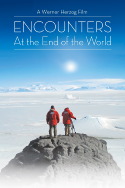
Werner Herzog has a fascinating way of pulling beauty out of what seems to be the end of the world. The "End of the World" that he presents not only describes the bizarre place on the bottom of the globe, but also the end of humanity as we know it. Needless to say, "Encounters at the End of the World" is not your typical documentary. Herzog journeys to the South Pole in what he assures is not another film in search of fluffy penguins, but is a dream-like illustration of the strange lives of the humans and creatures that inhabit and dwell in such a harsh and remote environment as Antarctica.
Herzog has come to McMurdo Station, which is the largest habitation in Antarctica, for a summer of eternal light. He arrived here after being drawn in by astounding underwater images captured by his friend Henry Kaiser, who happens to be an expert diver. He sets out to discover who the people are that live in such a place, and what it is that brought them. He encounters a slew of odd individuals in this small population. Upon arrival he meets a banker from Colorado who has left his life behind in search for more meaning beyond monetary value and a philosopher who has an utter fascination with the world and has had a desire for adventure since he was a child. He goes on to meet scientists of various disciplines from a cell biologist who views the microscopic world under the ice as being over-run by horrific sci-fi creatures, to nutritional ecologists and physiologists who spend their days on the open ice studying seals while listening to their electronic-like calls passing underneath them; what one scientist compares to Pink Floyd. Herzog encounters a woman who has traveled through South America in a sewer pipe, who now performs odd stunts at one of the bars in the town. All the while there is vivid and strong imagery that you are surely not to forget. From the eerie spider-like sea creatures that creep and scurry along the ocean floor under shelves of ice, to the center of a volcano where we learn the etiquette of dealing with the blasts, to footage taken underneath the eternal ice and exact South Pole where shrines are left for travelers in the future to come across and ponder about once the rest of humanity is lost.
From the very beginning of the film it is easy to tell that this is very much Herzog's story of Antarctica and the people within it. If it were any other documentary about Antarctica it would be overwhelmed with the threat of global warming and what consequences it holds for humanity, or overwhelmed with an abundance of footage of penguins and polar bears. However, there are penguins in some footage, but shown in a much different way than ordinary. Herzog converses with an isolated and timid penguin researcher, who much prefers being around penguins than conversing with humans, and he persists on asking if insanity and homosexuality exist amongst the penguins. I doubt that anyone else would think of doing that. He narrates his thoughts and feelings throughout and remains strangely honest and true to himself.
Herzog has a peculiar way of interacting with the people that he interviews, as well as a unique way of displaying them. He shows tid-bits of their separate lives and characteristics and converses informally, just as if he were on a vacation with them. Herzog shows the great lengths that they all have gone to escape the dull and ordinary. He shows these strange people in a light that emphasizes their unique individual characteristics that prove to be very memorable to the audience; no character is like the other. Even though the film has a sort of gloomy feeling that is often expressed through the characters that he interviews, he seems to make a point that they all have found some form of peace at the end of the world. In one scene a philosopher points out that all of the inhabitants are "full time travelers, part time workers, and professional dreamers." The philosopher then goes on to explain that Antarctica works as a form of natural selection for the people that have the intention to jump of the map, and they all meet where the lines intersect at the end of the world. Herzog also suggests that they all agree that the end of human life is assured.
Herzog allows us to journey through time and space, and shows us what we may end up leaving behind. We experience the microscopic findings of what very well could have be the origins of life and what drove us to evolve, to neutrinos that hold together the universe. There is an otherworldly feel that remains consistent. The film nudges at the idea of the end of humanity but does so in way that leaves you at ease with it. This is partially due to the outstanding cinematography and strong music that effectively pull together all of the emotions throughout the film. There are many scenes where the images and sounds do all of the work and emphasize the oddness and beauty of this strange world.
This documentary is very much a work of art. If you are looking for something informational that tells you how to think, I suggest you look elsewhere. This film successfully stretches the mind out of the ordinary and leaves you to your own thoughts and wonders about life and death and the continued universe in between. Herzog has an extremely artistic eye that shows forms of beauty in a very different light, that most would not observe and leave you feeling as if you are part of a much larger picture.
This review of Encounters at the End of the World (2007) was written by Matty S on 04 Jun 2014.
Encounters at the End of the World has generally received very positive reviews.
Was this review helpful?