Review of Devdas (2002) by Priya I — 15 Nov 2018
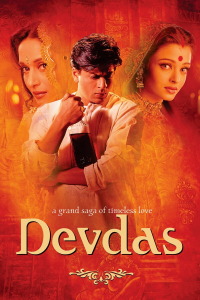
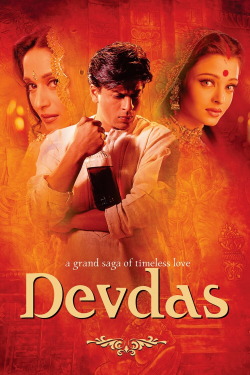
Director Sanjay Leela Bhansali's 2002 romantic tragedy Devdas is a tale of love stories that remain unrealized because of boundaries placed by societal institutions of marriage, family, class differences, and status, in combination with personal flaws of all the lovers. Childhood sweethearts Devdas (Shahrukh Khan) and Paro (Aishwarya Rai) meet after years of being apart, and are still deeply in love with each other. Conflicts between the families over differences in class prevent prospects of their marriage and result in Dev leaving his house, and Paro married to an older man. Dev isolates himself and becomes an alcoholic, living at a brothel where one of the courtesans, Chandramukhi (Madhuri Dixit), falls for him. He is unable to reciprocate this love as he continues to yearn for Paro. After a fatal drinking episode, a dying Dev arrives at Paro's doorstep, but she is prevented from seeing him in his last moments by her husband. Full of such dramatic events and a heart-wrenching ending, this movie is complete with a star-studded cast, grand sets, beautiful costumes, and elaborate choreography to soulful songs that serve to give it an epic quality that effectively captures the audience into its own world.
Instead of being realistic or depicting how ideal love should be, this movie arguably works to show how it should not be and that certain traits of lovers are very flawed, like passion, impulsiveness, being blind in love etc. This is one of the ways that Bollywood tackles romance and marriage, as explored by Rachel Dwyer in Yeh Shaadi Nahin Ho Sakti!: Romance and Marriage in Contemporary Hindi Cinema. Additionally, her point about "non-modern" vs "modern" views of marriage, where the former centers it on the wider family while the latter sees it as concerning personal happiness, explains the generational difference between Dev/Paro, and their families. This Bollywood formula of families being against real love because of societal standards is similar to movies like Qayamat Se Qayamat Tak and Veer Zara. Whether it be opposition due to past feuds or due to religious differences respectively, the families expect their children to inherit their hatred but they rise beyond that. Most importantly, they actively work to fight for their love, and the moral universe is restored because the lovers end up together in their own ways in a strong statement against hate. This contrasts with Dev as he lacks this trait of being able to "negotiate a space for himself and his love within the family" that Dwyer considers as a defining quality for a romantic hero. He realizes the need to fight for his love too late, and so the moral universe is never restored, upsetting the audience rooting for a successful love story. One criticism I would have is that by the end, because of the way events are presented, we feel most sympathy for dying Dev and forget about the fact that the two women have to continue living with their punishments for loving him: lack of liberty for Paro and lack of respect for Chandramukhi. However, overall, the aesthetics of the movie and the actors perfectly capturing the characters they play successfully make the audience invested in the story, and make it a classic Bollywood romance.
This review of Devdas (2002) was written by Priya I on 15 Nov 2018.
Devdas has generally received very positive reviews.
Was this review helpful?