Review of Code Unknown (2000) by Nooshin P — 04 Aug 2010
As beautiful as this film was, I can honestly say I did not fully understand the concept. But the wonderful cinematography and really realistic performances give this film the right edge to it. First off the title say it all, well at least in French. It translates into "A incomplete telling of various journeys" and that is just what this is. I originally titled this "71 Fragments in Paris" because it is essentially the same thing, only rather than a brutally honest and tragic finale, there is more of an incomplete opportunity for each character represented to get on with their lives.
Michael Haneke's first French film is a real experiment in network narrative. A series of stories interweave with each other. The locales go from Paris to the French countryside to Romania, giving us little snippets of the characters' lives before being cut short almost as if in mid-story. To the average filmgoer, this film would be confusing as hell, and surely the attention span of a Hollywood blockbuster lover would hardly want to sit down and think it through this film. I myself can firmly say I need to watch this one a few more times before I could really grasp the overall concept of this film. It is almost as if Haneke used the title.
The tagline says "Love Has A Language Of Its Own" and I guess that should be the main focus of the film. However, there are many other themes explored. There is poverty, racism, war and conflict among others. The film revolves around the lives of a colorful cast of characters. First off, there is a promising young actress played by Juliette Binoche who finds herself involved in an altercation concerning three more main characters: her photojournalist boyfriend's younger brother, a black young man who seems to hold high moral values and an illegal Romanian immigrant trying to earn some money for her family. The four characters all clash on a street corner. Within the next few minutes, the young boy and the actress go home, the black man is arrested and the Romanian deported. Such are the beginnings of a long and contorted narrative that jumps from one end to the other. That is all that can be said about this film's plot as each storyline gets cut off. Each character goes through some sort of internal struggle over their surroundings and most come to a understanding near the end. But what is made of these situations is completely up to the viewer as the film ends as abruptly as one of the segments contained. Although the story returns back to it's original locale: the street corner.
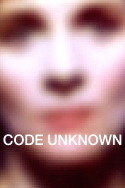
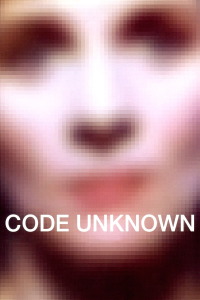
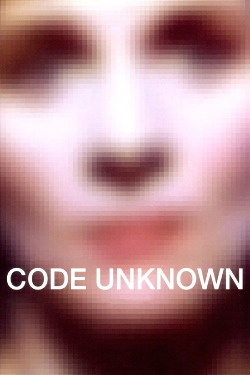
Haneke brough back Jürgen Jürges (Funny Games) who employs some really brilliant camera work to this series of tales. The opening conflict is a ten-minute-long exchange of dialogue that involves the camera moving back and forth over the action. There are many other shots like this as well as Haneke's trademark static shots. The big vehicle for this film was casting Juliette Binoche in one of the leading roles. This is one downside of the film. Instead of Haneke's name on the cover, the film contains Juliette's moniker emblazoned on the front as well as a random shot from the film of her that makes this film look like a thriller. It is anything but that and definitely not about Juliette's character. It seems as if the producers did not have enough faith in this film, so they made it known that an Oscar-winner is in this film (as opposed to Haneke's other films, where he is clearly acknowledged).
Another change in style for Haneke is the lack of shots of televisions. The mass media is not drastically explored as usual. The TVs are mostly off or shown in reflected surfaces. Being that this film is mostly about relationships, Haneke decides to turn the TV off and show us real people experiencing their lives without the use of other mediums. Only a couple of times is the television featured and it is minor and actually quite distracting. This is a quality that I will always admire Haneke for.
This film must be watched multiple times, yet it is almost a pleasure to watch.
This review of Code Unknown (2000) was written by Nooshin P on 04 Aug 2010.
Code Unknown has generally received positive reviews.
Was this review helpful?