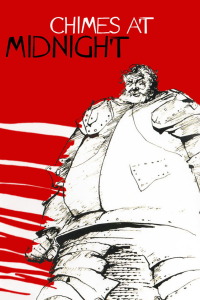
Review of Chimes at Midnight (1965) by Barbara O — 15 Feb 2008
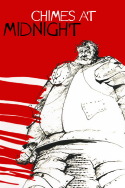
A tricky film to review in such a manner as this. It's directed by Welles, arguably the greatest director the screen has ever seen, so expectations going in are sky-high, but unlike Citizen Kane or Touch of Evil, "Falstaff" misses the mark. The first and worst error he makes is taking Shakespeare's two plays, Henry IV parts one and two, and abridging them to fit the space of roughly two hours. One cannot abridge shakespeare and make it better, end of story. The mood, the texture and themes are very carefully thought out; removing scenes that appear unnecessary only diminish the bard's work. The BBC production of these two plays, unabridged, runs roughly 5 hours long, so you can see what one would be missing here, especially considering how Welles adds new material. The argument in defense, then, is that this is not the stories of Henry IV parts one and two, but merely old sir Jack Falstaff's story, and thus should be abridged, but then why all the scenes with Hotspur, Hal and Bolingbroke and no Falsfaff to be seen? I feel this would have been a far better movie if it had concentrated solely on Falstaff or considerably lengthened its run time to include the entirety of the two plays, as it is, the pacing is extremely awkward (especially during the Henry IV part one segments) and much of it feels rushed so we can get the necessary plot out of the way and allow time for...what, exactly? The film hardly paints a John Falstaff that's different from Shakespeare's. It doesn't explore the character any further in the added content, all we see is old lovable Falstaff being old lovable Falstaff. In short, I'd say my biggest problem with this film is its conception: Falstaff is a supremely complex character that could easily take up the two hour runtime, so I wonder as to why he doesn't.
Well, with all the complaints about the script aside, I must say this is classic Orson Welles. Quick, fluid editing with hypnotic close-ups and camera angles bring about a perfect atmosphere for the story, which is decidedly dark in itself. Welles is absolutely perfect as Falstaff, as is Keith Baxter as Prince Hal. The rest of the cast offer outstanding performances, making Shakespeare's weird sort of writing natural instead of forced, but I question the manners in which Hotspur and Bolingbroke were presented. Hotspur is decidedly more 'knightly' in Shakespeare's version than he appears here, which is necessary if we are to believe that Hal 'steals' his honor in killing him, while Bolingbroke is in this movie made out to be too noble, too righteous, not at all the man who usurped the throne and silenced his enemies that we saw in Richard II and Henry IV part one. Aside from acting and cinematography, the soundtrack and sets were great. The Battle of Shrewsbury, which was apparently a big inspiration for Braveheart and Saving Private Ryan, is absolutely awesome in its chaos, using speed tricks to create a phenomenal atmosphere.
To sum it up, this movie was a disappointment, yes, but it's not a bad movie by any stretch of the imagination. It's the best shortened Shakespeare I've seen, though the full, unabridged BBC productions were better simply for the fact that the scripts were absolutely perfect and bulletproof. Still, this is a must for the Welles fanatic, and highly recommended to anyone who likes ol' shake-of-the-speare.
This review of Chimes at Midnight (1965) was written by Barbara O on 15 Feb 2008.
Chimes at Midnight has generally received very positive reviews.
Was this review helpful?