Review of Capernaum (2018) by Nightreviews — 12 Feb 2019
In the early chapters of my life, Lebanon was an elusive figure of my imagination. Being born and raised in Toronto, I would hear stories of my homeland from my cousins, uncles and grandmothers. From their descriptions of the countryside, my homeland played in my mind like a fantastic Wild West; the stories always had an underlying sense that the country was a type of Eden, a magical place with magical people, a gem placed perfectly in the midst of chaos.
When I made my first trip to the country I was twelve years old. My familial roots trace back to the northern part of the country to a town called Joub Janine in a region known as the Beqaa Valley which is nestled right below the currently devastatingly war-torn Syria. My experiences were life altering; a colossal shift to my consciousness occurred about the world we live in and how that sucker spins, how you can enter a world so electric and alien to your own world with just a 12 hour flight by plane.
My first visit due to age was made up of primarily the country’s decadent cuisine and visits to my family.
I went back at the age of seventeen with my brother for three weeks, and it was then that my Wild West fantasy began to take true form in reality. Streets cross each other making a labyrinth of life, electric lines lay over and under and all around each other, looming above the streets like a friendly spider’s web. The youth is passionate and wild, full of life and wisdom gathered from their surroundings complete with beautiful flowing hair and beautifully wrapped Hijabs rest on the woman as they socialize, smoking tobacco out of hookah pipes that give off the most fragrant of aromas. This aroma follows you, like the sun that stays on your shoulders with strength, or the full flavored tobacco that wafts through the streets and barber shop. The barber shop that is run by a man who’s lost his tongue in the war yet he still knows just what you want from your hand signals. Lebanese like to use their hands when they talk, they throw them down towards the floor like they are letting go of weights and point as if they were being cut from a Tintin comic strip. Firearms are readily available and commonplace yet no one ever shoots each other, they are carried for their destined use of protection, and perhaps the occasional couple of discharges in the many farm fields of the country. Seatbelts are ignored and so are road signs, if any, yet everyone seems to get along just fine. Some ride in German automobiles while some entire families ride on one motorized scooter, newborns and all.
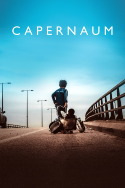
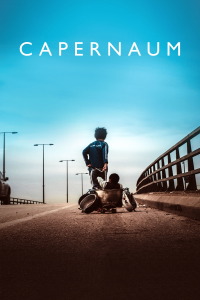
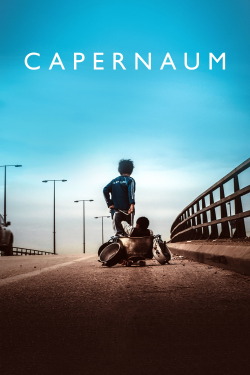
Capernaum, the newest film by Nadine Labaki shows just how exceptionally talented the renowned Lebanese auteur is at capturing that land that holds my heart, and hers as well. Her style is, if comparable, reminiscent of the flavour of Larry Clark’s Kids, with a dash of Paul Greengrass’s Green Zone, and many hints of Vittorio Di Sica’s brilliant Umberto D. The film is poignant; revolving completely around the world of a twelve-year old boy named Zain (Zain Al Rafeea). He lives in a steamy, crammed apartment with his band of siblings, and neglectful mother (Fadi Yousef) and father (Kawsar Al Haddad) in a war-torn neighborhood in Beirut. His parents out of devastating desperation give their daughter to the landlord of their building in hopes of leniency with their payment of rent, an act that naturally enrages Zain, causing him to run away from his family into the abyss of Beirut.
In his journey of self-preservation destiny he meets an Ethiopian migrant worker Rahil (Yordanos Shiferaw). Rahil has an infant child of her own name Yonas (Boluwatife Treasure Bankole), who gives such a contribution to the organic documentary inspired style that is truly remarkable. Rahil takes Zain under her care for some time providing some of the most beautifully shot scenes of intimacy in cinema over the past little while. The film’s heart is transcended through Zain and Yonas; their acting is so poetic, watching these two children interact, with the slightest of movements, give elusive kinetic energy that never feels premeditated in the slightest.
Drama ultimately knocks on the films door and heartbreak occurs with Zain climatically commits a violent act causing him to stand in court with his parents. He declares hatred for his parents and seeks justice for them giving him life when they have no intention to properly love or care for him, as well as his siblings. This embodies the idea of Capernaum which is according to Libaki “to give a voice to children who otherwise do not have one.”.
I have watched a select couple of brief scenes from Labaki’s previous films, yet never have I seen one in its entirety and this was quite the film to start me off. The opening sequence is melodious; we see Zain with a number of other children, horse playing through the tangles of flights of stairs and street corners of the neighbourhood.
This review of Capernaum (2018) was written by Nightreviews on 12 Feb 2019.
Capernaum has generally received very positive reviews.
Was this review helpful?