Review of Burnt by the Sun (1994) by Josh M — 18 Apr 2009
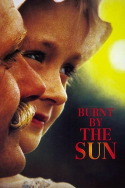
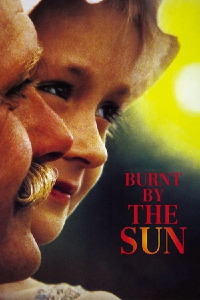
[color=black][size=3][font=Times New Roman] [color=black]This Russian film, directed by Nikita Mikhalkov-a "Soviet aristocrat," tells the story of a normal 1930's well-to-do Russian family, consisting of wife Marussia, husband Soviet Colonel Kotov and their young daughter Nadia, which is jolted by the visit of a man named Mitia, a ghost from the past. Under the old order and before the marriage of Marussia and the Colonel, Marussia was engaged to Mitia, a young man hired by the Red army to report on the activity of white loyalists. The lovers were reluctantly separated by Mitia's duties by the Colonel himself and had not communicated with each other until this fateful visit. The former or not so former spy Mitia is welcomed into the family as an "uncle," and spends a significant amount of time with young Nadia. In a particularly poignant scene, Mitia tells Nadia an interesting fairy tale of a divided young couple, an allegory of sorts for his work with the NKVD, while Kotov sits in the adjacent room. Tensions arise as to whether Mitia is still in fact a KGB agent with a personal vendetta against Kotov, seeking revenge for the life he lost. He gives no sign as to his objectives other than seemingly harmless jokes of KGB activity and espionage. It is not until Mitia reveals to Kotov that "a car is coming for him" (a Soviet signal for KGB apprehension and most probably death) that we know for sure of Mitia's intent and Kotov's fate. Kotov remains faithful to Stalin and seems to hold on to hope that his loyalty will overcome the sly position of Mitia. The juxtaposition of the civil war hero Kotov and the jaded and experienced Mitia draws a fine line between arrogant and obtuse bureaucrats and wicked KGB characters. The non-Western responses to these two types of Soviets were both somewhat negative. Russians despised the character of Mitia as an inadequate representation of a good KGB agent. The suicide was seen as a Western influence as was the Mafia-esque emphasis on the aesthetics of the car. Others rejected Kotov as well; however, they ultimately identified more with him. Furthermore, the death of the simple peasant who recognized the famous Colonel Kotov after his apprehension is seemingly inaccurate, as it was not Soviet practice to leave bodies out in the open. Ultimately, in reflecting upon the role of espionage within the movie, Mitia can be characterized as the villainous spy who works not solely for the Soviet cause but instead is emotionally motivated by his own personal vendettas. [/color].
[/font][/size][/color].
This review of Burnt by the Sun (1994) was written by Josh M on 18 Apr 2009.
Burnt by the Sun has generally received very positive reviews.
Was this review helpful?