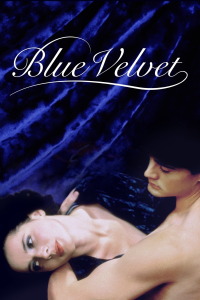
Review of Blue Velvet (1986) by Kevin N — 13 Jan 2014
David Lynch's masterpiece BLUE VELVET is not only the legendary filmmaker's most involving and evocative movie; it is simply one of the finest films made in the 1980s. Lynch is truly a one-of-a-kind filmmaker, and I have gained a deeper and deeper respect for him as I have seen his work again and again over the years.
This one I find particularly worth revisitation because, just like the opening sequence suggests, there are just so many layers beneath the green grass, so many dirty little secrets hiding beneath the surface.
The movie's plot is deceptively simple, and anyone coming to BLUE VELVET for the first time looking for a true whodunit mystery is in for a shock. Lynch is totally uninterested in the facts of this crime story, and in fact seems to taunt his viewers by first allowing us to become totally involved in protagonist Jeffrey Beaumont's innocent detective games and then throwing us right into that closet with him, to be exposed as voyeurs and to be caught and exposed right alongside him.
But don't let morality get in the way of a Lynch experience. The director cares little in punishing his voyeurs, and actually seems to believe that voyeurism is a healthy and necessary part of sexual awakening.
There can be no light without the contrast of dark. "The room" in BLUE VELVET- anyone who has seen the film will instantly recall the apartment of Dorothy Vallens (Isabella Rossellini) and be filled with a wide array of emotions- is treated as a stage.
More than almost any other film, I seem to absorb a different experience from BLUE VELVET each time I revisit it- as if it were a play always being performed under different circumstances. And yet despite this, Lynch's style is totally cinematic, capturing the vibrant colors and brutal interactions with sickening closeups, haunting long shots and canted framework.
No one who ever sees the film is likely to forget the way in which Lynch pressed their eye to the slots in that closet door, forcing them to look. The movie boasts the best performing cast of Lynch's filmography.
Laura Dern and Isabella Rossellini are perfect as women in different situations; Dern's innocent curiosity and Rossellini's tortured agedness collide in baffling contrast. Much has been said about the great Dennis Hopper's sadistic turn as Frank Booth, a performance filled not only with the violence of the written character but also with the desperation of Hopper's real life struggle to end his drug and alcohol addictions.
And Kyle MacLachlan, who is often forgotten, brings a nuanced performance so crucial to the film's success, one that starts in warmth and brightness and nearly crashes and burns into perverse darkness.
These actors meet this director and are willing to go to any length to deliver this challenging experience, in all its ambiguity, and it is unlike any other you are likely to see.
This review of Blue Velvet (1986) was written by Kevin N on 13 Jan 2014.
Blue Velvet has generally received very positive reviews.
Was this review helpful?