Review of Blue Velvet (1986) by Delysid D — 06 Aug 2017
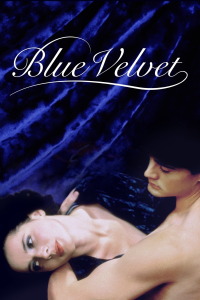
David Lynch movies are repeatable. I have seen Blue Velvet three times. Each time I saw it, more ideas came to me. It's like being a detective or a redundantly curious voyeur. Sure, being a movie goer is obviously a voyeuristic activity, but is the movie itself particularly self-conscious of its scenes? Detective questions abound.
I visited Roger Ebert to see what he thought. He reviewed the movie in 1986 and didn't seem to ever revisit it like he has done with other movies to subsequently recant his first review. He gave Blue Velvet one star and thought Lynch was laughing with contempt. He also felt Lynch robbed Isabella Rossellini's raw and risk-taking performance of its full-blown potential to reveal deeper "emotional discoveries".
I disagree. In fact, I find Ebert's criticism ironic in that Kyle MacLachlin's character also was inspired to defend Rossellini's character. It astounds me that Ebert slipped, but I forgive him. He grew since the '80's.
My take might be on a level of cliche. Ebert found the cheap shot middle class suburban satire disappointing. But, I found there to be layers within the cliche which was what was/is repeatable about the movie. They were not always immediately available due to the other events occurring. The movie is about (and I try hard to avoid saying, "The movie is about..." when it comes to layered stories; nevertheless,) the senses and how things are not always what they seem. Ebert caught on to the idea of what is on the surface is not necessarily what lies beneath, or, rather, he should have said, "What's on the surface betrays the obviousness of something more going on, more deeply." This is perhaps because Ebert missed it, yet it was always there in full view or sound or taste or touch or odor -- depending how much one is curious (or compelled).
This movie is compelling.
Kyle MacLachlin's character, Jeffrey Beaumont, plays detective. He does not play a detective. The real detective is one whose integrity is in question when he winds up associating with the corrupt. Doesn't a detective in some sense associate with the suspects?
Jeffrey's father, a businessman, represents the innocence of having made it through life and winding up in the middle class representation of mundane success -- watering his garden. The proverbial garden. The movie illustrates how everyone's garden differs, and how each one struggles against an impotence of losing control. Losing his or her garden.
Playing detective, after being told to lay off, allows Jeffrey a sense of control in another direction. It's about discovery and no longer being innocent or, rather, ignorant. While at the same time Jeffrey's father becomes incapacitated and can no longer care for his garden (he does have workers to mind the shop -- a neighborhood hardware store -- including his son who works the hours he wants), Jeffrey empowers himself. Perhaps both characters struggle to recover a sense of strength against a straight jacket of literal and figurative body casts tying one down -- useless -- (suburban repetition or that which keeps one from his curiosity). There is a knowledge to be explored and ironically, once discovered, the knowledge of innocence cannot be regained.
Or, can it? After all, maybe we are all innocent or ignorant of something at some point or another. There is an excellent mirror scene, placing us in a voyeuristic position, and as the camera pulls away, the objects in the room come into view as well as the image in the mirror. The image faces the camera. What is the objectified, now?
The first sense might indeed be control and curiosity is what makes a good detective. Using one's senses to discover is what's in a detective's toolbox. Seeing an ear lying on the ground starts it. The ear hears. The ear is the first clue. There is the blind hardware worker who sees sight without vision suggesting we don't have to have all the tools to get it. There is a brief mention of a big tongue and later, tastes -- like Heineken, Pabst Blue Ribbon (before it became "hipster") and the sucking down of drugs. There is smell. This movie expertly conveys odor to the audience through the use of sex, a dingy apartment, a rotting ear. And, of course -- Blue Velvet. The velvet has an odor of coolness with the scent of hidden sex a woman holds beneath the cover-up.
Texture. Touch. Good touches and bad touches. Black and white and even layers of blue velvet fabric that do not reveal all out evil or all out innocence.
Dennis Hopper's character is the closest to black and white, psychopathic evil, but maybe he simply doesn't want anyone nosing around /his/ garden. Is he justified? Is any of this justified? Are we as audience members who dare judge the good and evil just as guilty of voyeurism as Jeffrey was guilty of breaking and entering and possibly erection while watching Rossellini's character appear to be raped?
Rossellini later goes mad and screams, "His disease is inside me!".
Laura Dern's character is just about as black and white good as good gets, yet she borderline cheats on her boyfriend, gossips, and enables illegal acts. She dreams. The robins in her dreams represent love. In reality, rather, the suburban reality, a robin greets her. The robin chomps on a bug. Grandma puts a bite of meatball or cake (who knows?) in her mouth horrified. "How could he eat that bug?" The robin watches them. Jeffrey laughs.
None of it really beats the viewer over the head with moralizing. Sure, it's disturbingly funny. One can sense what might be contempt. Life runs its course like the grubs beneath the soil automatically going about their activities. Their activities enrich the soil -- the soil of suburbia no one wants disturbed. No one wants bugs crawling around their home, but no one wants the odor of pesticide, either.
Rossellini's motivation was for her child. Her child is happiness. He has been kidnapped. She pursues avenues to get him back. To see him safe. Maybe it's maddeningly cliche to use this as a metaphor for regaining lost innocence or stolen innocence. The innocence was used to coerce Rossellini. "You will never have it back, but I will let you see him, again, briefly." She does what it takes to glimpse her own garden, bearing apparent torture, maybe even growing to like it as she is fed her reward of seeing her son.
Jeffrey is afraid of being caught. He does nothing and everything to help. He may even enjoy the "show". In the end, he expresses empathy. Or is it sympathy? Maybe neither. Maybe he simply wants to impose his values. He wants Rossellini's character to experience sensuality. She wants him to experience sadism. He already did, at a distance. He may even feel guilty. He will never lose that vision. That memory. Therefore, he might be able to make a difference by helping her enjoy a kind touch. She might be telling him, Don't feel guilty. Enjoy it.
No spoilers, here. Not exactly. Not everyone lives happily ever after. Jeffrey appears to have listened. He finds himself content on a lawn chair in his dad's yard about to enjoy a meal when the women call him in to dine.
I have no doubt I'll watch this movie again. And enjoy it.
This review of Blue Velvet (1986) was written by Delysid D on 06 Aug 2017.
Blue Velvet has generally received very positive reviews.
Was this review helpful?