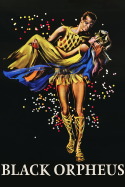
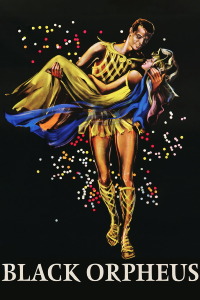
Review of Black Orpheus (1959) by Al M — 12 Aug 2010
A film about fate, the cycles (or gyres, if we want to use a Yeatsian term) of history, and the timelessness of myths, Black Orpheus is a beautiful, funny, and tragic filmic experience that explores the relation between humankind and nature and the nature of love and friendship.
Marcel Camus's film transports the Greco-Roman legen of Orpheus into Carnivale atmosphere of Rio that is filled with other classical characters: Eurydice, Hermes, Cerberus, etc. In part, Black Orpheus is a Bakhtinian analysis of the human need for carnival, a need the Greeks themselves understood through Dionysian and Elysian cults.
In other words, it is about the human need for an outlet, for a time in which social restraints are removed and individuals may enjoy their more primal aspects, aspects that the film does not depict in a desultory or evil fashion but as joyful, beautiful experiences of dancing, music, love, and lovemaking.
But mostly Black Orpheus is a story about our connection to those myths that seem so archaic--it is a narrative that demonstrates the manner in which those tales will always resonate because they are fundamentally connected to our human nature: they are stories about love and death, hatred and revenge, beauty and divinity.
While Black Orpheus featurs such seemingly heavy themes, it remains a true delight to watch; it is a fun film from beginning to end that will take you from the heights of laughter to the depths of despair in a manner that is seemless and enlightening.
This review of Black Orpheus (1959) was written by Al M on 12 Aug 2010.
Black Orpheus has generally received very positive reviews.
Was this review helpful?