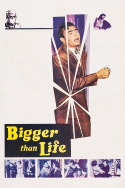
Review of Bigger Than Life (1956) by Davey M — 12 Oct 2011
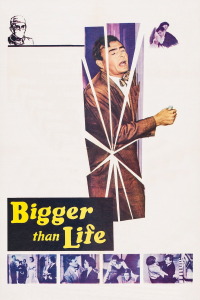
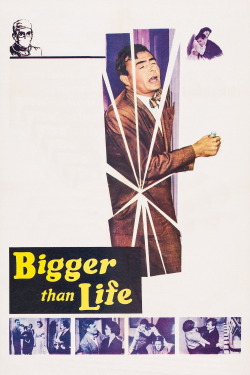
"Bigger Than Life" works simultaneously as a parallel to a specific social issue (the film, as we learn in the opening credits, was based on a newspaper article about addiction to cortisone) and as a striking parable about the more prevalent dangers eating away at the American family beneath the sunny Cleaver family exterior.
On the one hand, a cigar is just a cigar and the cortisone really is cortisone--"Bigger Than Life" brought to light the perils of mental illness and drug abuse, and that concern is clearly front and center, as the film unmasks a reality we'd still frequently just rather not talk about nearly sixty years later. But the film works just as well with the cortisone functioning (at least in part) as a metaphor for the patriarch's addiction to capitalism, consumerism, and taskmaster-ism--the same work-yourself-to-the-grave American dream mentality Tati pokes fun at in "Jour de Fete" is ruthlessly laid bare in Ray's film. While Ed Avery's drug addiction is front and center, it is his dissatisfaction with his dull suburban life and job that comes first--he can't even stand to be in the same room with their friends, and the cortisone merely enhances tendencies that are already all too evident.
Mason's performance as the Avery patriarch is astonishing, towering, obliterating stuff. His English accent and oozing urbanity set him apart as something of an outsider from the beginning--the smoothly parted hair, handsome face, and aristocratic voice feel utterly out of place in the classroom, and it's Mason's sophistication that sells his character's shame at taking a second job as a cab driver, and, later, creates such a startling effect when Avery starts to come utterly unhinged, turning from an ordinary man into a monster as he pushes his son and himself to be bigger than life--smarter, stronger, faster, the perfect student and the perfect athlete. As Avery transforms from schoolteacher into brutal disciplinarian (contrast his first scene with a student to his later scenes with his son), "Bigger Than Life" turns from domestic melodrama into domestic horror, with the mother and son prisoners in their own house (both literally kept behind locked doors at different times in the film) and the father's shadow weighing down on them oppressively, trapping them in the frame. It's self-improvement taken to a self-destructive extreme--not just self-improvement, but eternal progression, with Ed Avery's desire to keep up with (and surpass) the Joneses eventually taking on blasphemously biblical proportions. Avery's American dream followed to its logical conclusion is absolute power--the attainment of godhood and the perversion of godhood, with Avery's unforgiving perfection resulting in condemnation without exception (including himself, including God Himself: no one is beneath Avery's judgment).
Perhaps the most shocking aspect of Avery's decision to kill his son, his wife, and himself is not how illogical it seems, but the cold, prevalent logic underpinning it. The cortisone enhances them, but these are symptoms we already know.
This review of Bigger Than Life (1956) was written by Davey M on 12 Oct 2011.
Bigger Than Life has generally received very positive reviews.
Was this review helpful?