Review of Baby Face (1933) by Eric H — 19 Apr 2015
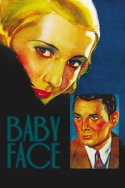
Directed by Alfred Green, "Baby Face" is one of the more notorious dramas of the Pre Code era. Filled with sexual innuendos, a fairly erotic plot, many double entendres and some risqué camera work, the film stars Barbara Stanwyck as the aptly named Lily Powers, a plucky young woman who lives with her father in a smoky industrial town.
From the onset it is established that Lily's reality is grim, grim, grim. She lives in a cramped apartment, spends most of her time in her father's dingy speakeasy, has but one friend (an Black maidservant) and is routinely prostituted by her father to local men.
When her father dies, Lily thus sets about trying to change her life. She leaves her town and heads for New York City. Here she intends to get rich by marrying a wealthy banker. The film then watches as Lily flirts, sleeps with and cons a series of men, most of whom are multimillionaires or in positions of power.
Her actions are guided by Friedrich Nietzsche, the famous German philosopher whose teachings are taught to Lily by an elderly man named Adolf. Modern, casual film-watchers won't have much use for "Baby Face", but it's an interesting film when put in historical context.
Before Hollywood began implementing codes, censures and strictures, a number of somewhat daring films were made. These featured Blacks in fairly strong roles (afterwards, miscegenation laws were essentially used to rationalise kicking blacks off screen) and offered frank treatments of sex, sexism, violence and abuse.
In "Baby Face's" case, we have the tale of a sexually abused young woman who understandably grows to hate men, people and perhaps the world itself. This persecution then fuels Lily's perceived right to persecute others.
Believing exploitation to be "natural", a "fundamental part of reality", she sleeps with and scams everybody, until she wins the chance to essentially inherit a mega-bank. Lily abruptly turns this prize down, however, having learnt the value of true love, kindness and so forth.
Written during The Great Depression, the film's very much a parable about nihilistic, soulless social systems, and a plea for ethics and moral, kinder social relationships. A true masterpiece.
This review of Baby Face (1933) was written by Eric H on 19 Apr 2015.
Baby Face has generally received very positive reviews.
Was this review helpful?