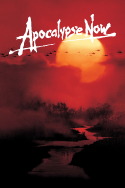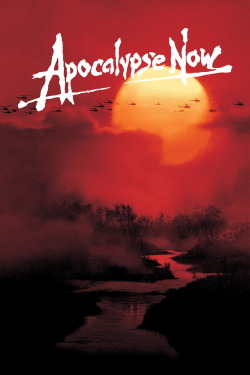
Review of Apocalypse Now (1979) by Cael M — 19 Jul 2013
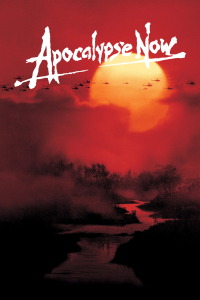
Apocalypse Now is the greatest war film ever made, and no other film comes close to this one. I couldn't believe my eyes during this weird, haunting trip, and although it's a long one, I forgot reality existed and I was absorbed into the depressing, frightening life of horror of Martin Sheen's character's, Captain Willard, life living in the Vietnam war. This is probably what seems like Francis Ford Coppola's last true great film in his career, and it doesn't seem like he ever really reached the heights of his previous, groundbreaking career again that resulted in some of the greatest films ever made, from the Godfather to this. This is a disturbing, scary, intense, and very sad journey through the absolute chaos and horrors of war, and I was no less than riveted by the end of the movie, although some may be thrown off by its deliberate pacing. If anything, I actually thought the deliberate pace added to the experience, and it gave you a better picture of the scenario by really introducing you to the madness of the lives of these soldiers.
It may be unfair to compare this film to Stanley Kubrick's Full Metal Jacket, but they do share the same general message regarding the chaos of war. Full Metal Jacket is perhaps far more accessible and rewarding, and it highlights more of the comradery of soldiers during the Vietnam war. However, Apocalypse Now (at least in my opinion) has far more depth and highlights more on the psychological aspect of the soldiers' experience through the horrors of war. Don't get me wrong, Full Metal Jacket is still a superb movie, but I don't quite feel like it has as much depth as Apocalypse Now. While Full Metal Jacket had humor and some light-hearted moments, Apocalypse Now is purely a descent into the darkness and madness of war, and it doesn't attempt to sugarcoat any of the brutality, and it adds a bucket load of symbolism and profoundness on top of it.
I've heard many complaints of the film having absolutely no plot, but I'm perplexed by that remark, and sure, Apocalypse Now is not as plot-driven as it is character-driven, but the experiences Captain Willard faces are the result of the mission he is given. It still does have a progressing plot, though, and it's about Captain Willard (Martin Sheen), who is assigned on a dangerous mission into a Cambodian jungle to find and kill Colonel Kurtz (Marlon Brando) who is rumored to have gone insane and turned into a warlord, now commanding his own set of troops inside the jungle. Willard is also accompanied by a crew of young soldiers, including a young Laurence Fishburne. The film takes place during the Vietnam war, and as I said, it highlights Willard's psychological experience more than the plot, but it still progresses. I was on the edge of my seat for the whole movie purely because of how mysterious the scenario was, and what motivated Kurtz to become the man he is rumored to currently be.
The acting is phenomenal stuff here, especially Martin Sheen as the leading role. Martin supposedly got a heart attack during the filming, and Marlon Brando was overweight so they had to cover that fact by using a "shadow" effect on his body. Martin also improvised a scene a few minutes after the opening where he punches a mirror to portray the struggles of his character, and his hand was bleeding. Yet, both of these things show Martin's commitment to this role, and he was powerful here. He nails down the psychological aspect of soldiers during the war perfectly. Marlon Brando is perfect and very peculiar here as well, and I don't want to spoil anything about his character, but he seriously shows how profound of an actor he is here. Robert Duvall also makes an appearance as Captain Kilgore, and he evoked both emotions of fear and odd laughter, and he also said one of the film's most famous lines, "I love the smell of napalm in the morning!". Harrison Ford makes a small appearance as the man who gives Willard the mission, as well as Dennis Hopper, who's a reporter, which were both great.
After the riveting opening scene with The Door's song "The End", there is a conversation about the task that Harrison Ford is giving to Willard, and although it feels somewhat relaxed, it gives the viewer of an idea of what's to come ahead, and all of it still feels unsettling. It becomes far more unsettling than that, almost beyond comprehension, and it is a pure descent into the intensity and horrors of war. There are two kids of intensity and suspense- there's the high-octane, fast-paced intensity and suspense, and there's the slow-building, chilling type of intensity and suspense. The latter is used here, and very effectively, making for some of the most terrifying moments I've ever seen in a movie. It is very bleak and dark, and at times it's heart-wrenching and gut-wrenching. The finale is one of the best I've seen in a film, and I'm not really sure why I hear lots of complaints about the final confrontation during the last half hour. It does change the pace and the mood of the film, and it is strange, but it still packs such a punch of terror that it's hard to deny the stunning quality of it.
Even the whole film itself looks stunning, and it's evident that a large budget was put into this movie, whether it's the effects or the overall cinematography, and both are very impressive. They're perfectly used to encapsulate the bleakness and darkness of the war, and it's hard not to be affected by them. It's not quite as disturbing when it comes to gore then when it comes to the psychology of the characters, but the experiences are emotionally powerful and equally as gut-wrenching as a bucket of carnage and gore. It's thought-provoking material, and its sheer scope as a war film helps the emotional effects become more haunting and ugly (despite a stunning and impressive style, that is). Its style is unconventional and daunting, and it's hard to look at times, yet it's impossible to resist. Even its soundtrack is very eerie and haunting, and its a highlight of the film's style as well. This movie will stay with you for a very long time after watching it, and takes the war concept to a new level in a very different path than most.
There's a ton of symbolism in the film too, especially in the last half hour. It may confuse some, because those last thirty minutes are odd and surreal stuff, but if you look a little deeper and put your full attention, you'll easily understand the sheer power and significance of the scenes. There's lots of fog throughout the journey on the river they're travelling on, and they represent the alienation of Willard and his crew as they're heading towards an unknown territory where the mysterious Colonel Kurtz is supposedly prospering, adding a true sense of fear to both the soldiers and the audience. The river is almost a metaphor on itself of their journey and their experiences leading towards the peculiar Kurtz, and the last few shots of the film are some of the best ever put to screen. Without spoiling, they represent so many things that it would take a long time to list it all. You realize so much by the end of the film, and it is pure insanity for its whole entirety. In no way did I see this movie as a pro-war film, and it's the complete opposite.
Hollywood needs to make more movies like this, but unfortunately it's not too often that a movie as profound and sophisticated as this comes out, at least in wide-release. This is the highest tier of filmmaking, and it's nothing short of one of the greatest films I've ever seen, as well as the greatest war film I've seen. I haven't seen the Redux version yet, which is a longer version, and I'm skeptical that it may become dragged and it may take away from the quality of the film, but I'm still going to watch it anyways. Francis Ford Coppola is a genius, and this is one of his greatest achievements. It's gotten even better with age, and its poetic beauty is just as effective. It certainly deserves every bit of respect as one of the greatest movies ever made, and leaving this film at least not a little affected is practically impossible. Apocalypse Now is definitely one of the most extraordinary achievements of American cinema.
This review of Apocalypse Now (1979) was written by Cael M on 19 Jul 2013.
Apocalypse Now has generally received very positive reviews.
Was this review helpful?