Review of Another Woman (1988) by Davey M — 05 Aug 2008
I am not a big fan of Woody Allen's dramas and generally think his best work is his early absurd slapstick comedies. Films like Match Point (2005) and Crimes and Misdemeanors (1989) suffer from an appearance of ethical profundity, when in fact they are rather dull and lack the nuance Allen seems to think they have. Another Woman isn't terribly original, and its debt to Ingmar Bergman and his film Wild Strawberries (especially) is evident in almost every scene.
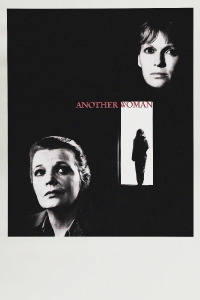
Still, I found the film genuinely sad and emotionally engaging even if the material is derivative. Part of the pleasure here is Gina Rowlands's performance as a philosophy professor named Marion looking back on her life after turning 50 (a female retelling of Wild Strawberries in other words.) She is excellent and has rarely been this good outside, of course, of her brilliant work in some of John Cassavetes's films. Given that most recent Allen films have a juvenile misogynistic streak, it is especially compelling to see a sophisticated portrayal of a woman by him.
Withholding plot details, since how the story unfolds is important (as well as the ending), the film is actually rather direct. It is about love and regret, or more specifically how we all will eventually regret the lost loves of our lives. There is a beautiful and short scene where the excellent John Houseman (who plays Marion's father) states directly that he regrets that the woman he lived most of his life with isn't the one he loved the most. Houseman delivers this simple line with such death-haunted conviction (he died shortly after shooting the film I think) that it struck an emotional nerve with me, which is something that rarely happens in a Woody Allen film. And so in that moment of understated brilliance, the film says more than dozens of other lesser Allen films do. That regret is what the film is about. In truth, though, there is double regret here: the regret that most of us will lack the courage to open ourselves to the other who we love the most, and the regret that, if we do open ourselves, the other will likely fear being loved in such a way and not return that love. And so like John Houseman's character, and even more so, Gina Rowlands's character, we stumble through life, living out regrets never really fulfilled, except in those rare cherished moments that transcend such horror. And that horror, so beautifully conveyed in this film, is why Another Woman is one of Woody Allen's better films.
This review of Another Woman (1988) was written by Davey M on 05 Aug 2008.
Another Woman has generally received mixed reviews.
Was this review helpful?