Review of Annie Hall (1977) by Shane S — 20 Aug 2011
I'm gonna review this without the overwhelming anti-Mia Farrow bias this time.
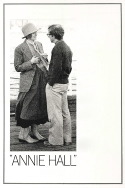
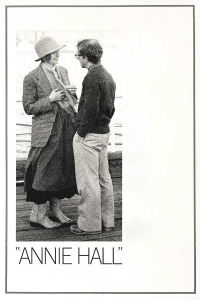
So, yeah. It's one of my top 10 favorite films. A film that not only impressed me thoroughly with its impeccable and flawless comic timing but still manages to make me laugh on repeat viewings as if it were my first time (while pointing out little nuances that I hadn't noticed before), this timeless and universal look at relationships and how people can mess them up without really knowing it is not only Woody Allen's best film, it is one of the best films of the '70s and...if it weren't for Robert Altman's continually inventive and hilarious "Nashville," it'd be my definitive favorite film of all time. This is the film that not only got me into watching films but also told me that films were much deeper than just "look at people do this on screen." This film set some exceedingly high standards for comedy - a lot of modern comedies, while still full of belly laughs, don't seem to mix intelligence, sarcasm, satire, and the underlying theme of unconditional and unceasing love correctly as Allen's film does.
With a cast of memorable characters, from Allen's Jewish Aspie comedian/playwright Alvy Singer (an exaggerated version of himself) to Diane Keaton's ditzy but free-minded WASP Annie Hall to Tony Roberts's media-savvy and egocentric (but always friendly) actor Rob; a really great script from Allen and longtime collaborator Marshall Brickman (in my opinion, the best screenplay of all time due to its freshness and inability to become outdated...well, save for the fashion); and this sense of artsy, yet amazingly cartoonish, organization that shows Alvy as he tries to make sense of how he drove his one true love away, "Annie Hall" is simply one of the benchmarks of romantic comedy and one of those films that shows that the '70s can be good at filmmaking too. I don't know why people say the '40s and the '50s were - back then, you wouldn't have a film that screamed so much independence back then. Not even Otto Preminger would touch this.
What's so good about the plot? Because it's pretty much non-linear. While a good portion of the film seems to be Alvy sifting through his memories in order to pinpoint the exact reason why he can't stay in a healthy relationship, a lot of it shows him being content with Annie, from being extremely fearful of store-bought lobsters to visiting her equally-crazy family (her brother is an artist who sees violence as beautiful; her grandmother is a silent anti-Semite) to even watching documentaries about Nazi resistance in France and not really giving a damn (though she did want to see that Bergman film). The real reason why Alvy would disagree with Annie starts when she begins to get noticed for her singing abilities. Alvy, viewing the modern music world as this cesspool of insanity (a trait of almost every Allen film), finds himself disagreeing with her more and more, from drugs to living in Hollywood to reading habits (Annie starts reading the National Review! Alvy craps his pants!). Sadly, they go away, but for the better - Annie is allowed to discover herself on her own time while Alvy finds his muse by sifting through the relationship and replaying it so that they could stay together forever.
And what's so cartoonish about the structure? Alvy breaks the fourth wall. A lot. Hell, he even turns the film into a cartoon, complete with him Wicked Queen over her period and Rob suddenly butting in so he can show him this hippie poser girl who doesn't understand the sheer stupidity of Bob Dylan's "Blonde on Blonde"-era poetry. This film is what they call a "transition piece" - something that acts as a bridge in between a lighter, more slapsticky era of himself and his darker, more thought-provoking '80s material with Mia Farrow. Unlike most "transition pieces," which tend to mix these elements so unevenly, this manages to be quite a new style for the guy. And given how successful this film was, Allen could've remade this over and over, but he said, "Nah. I'll evolve," and he then made both "Interiors" and "Manhattan," both seminal works of drama. Sadly, audiences didn't agree. It takes a consistently funny Allen film to draw audiences - that's what made "Midnight in Paris" into such a big indie hit.
So, yeah. This film is a classic. This film deserves to be seen by all. This film shows that there's a human side to the guy who married his ex-girlfriend's Asian daughter. This film is the quintessential romantic comedy. No, scratch that. THE quintessential comedy.
This review of Annie Hall (1977) was written by Shane S on 20 Aug 2011.
Annie Hall has generally received very positive reviews.
Was this review helpful?