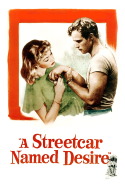
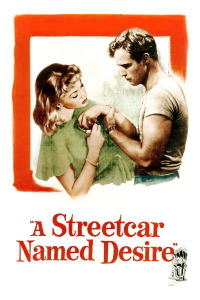
Review of A Streetcar Named Desire (1951) by Serge B — 05 Feb 2009
This film really set new benchmarks for what could be discussed and what ideas could be expressed in a film. It was also an interesting stage for acting; Brando is legendary for really pioneering the Method form of acting in film, which seemed contradictory to Vivien Leigh, who along with her husband Laurence Olivier, were staunch classical actors.
However, there is a strong tone of Method style in Leigh's performance in this film, and her refusal to let go of her fantasies of how things are and her inability to face the truth until her tragic fate at the climax of the film in some ways could be viewed as the death of the Classical form as the dominant style of acting.
I for one am glad Leigh took the leap she did in this film; I maintain this was her best performance on film, and I think it carried much greater depth, difficulty, and personal risk than the Scarlett O'Hara did.
Brando should not be ignored however, as he is terrific as Stanley, a man blessed with an alluring aesthetic appearance and a natural charm, but cursed (though apparently only cursed in the eyes of everyone but Stanley) by an animalistic, violent, and ultimately infantile mentality.
This tale of class and the changing face of society is a grand film, and a really stark new direction for the craft of acting.
This review of A Streetcar Named Desire (1951) was written by Serge B on 05 Feb 2009.
A Streetcar Named Desire has generally received very positive reviews.
Was this review helpful?