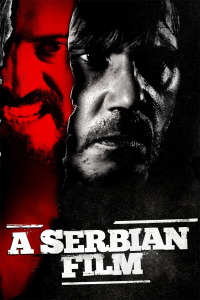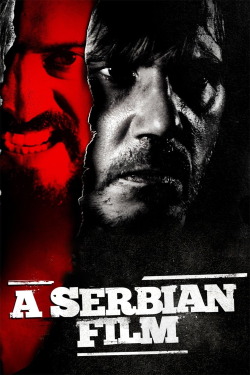
Review of A Serbian Film (2010) by Matthew R — 17 Nov 2012
Srdjan Spasojevic has created one of the most depressing, disturbing and grotesque films ever to be produced. Though many would call this overreacting, A Serbian Film lives up to its reputation as what I call the âultimate feel-bad movie.â? The content of this film rips so far into moral limitations that viewing it irrevocably changes the audience. Many films such as Ruggero Deodatoâ(TM)s Cannibal Holocaust and Marian Doraâ(TM)s Melancholie der Engel fall into mind when on the topic of extreme horror and gore, but this exceeds any typical expectations when approaching horror, something that is both incredibly unique, but also dangerous. It is through the acute attention to technique, craft and especially Spasojevicâ(TM)s amazing sense of mise en scène.
The first most present detail in A Serbian Film is the cinematography. The composition of shots have a good healthy balance between deep focus and varying shallow depths of field, which keeps the eye stimulated, even if it doesnâ(TM)t want to be. There are specific horrific scenes in this movies that, due to the angles and types of shots used make the scene not only quite effective, but also it is made far too effective. For example, in one scene toward the third act of the film, the main character Milos (played by Srdjan Todorovic) gets excessively drugged with bull Viagra by the antagonist in the film, an eccentric snuff filmmaker Vukmir (played by Sergej Trifunovic). He is then forced to rape a woman while Vukmir films with his other cameramen. Milos is then given a machete while he continues to rape this woman tied up in a barren room with nothing more than cameras and a bed, and told to cut her head off. He does.
This scene has impeccable lighting. Setting the feel of the room is the primary function of lighting design, but when trying to achieve a very specific reaction in the audience, lighting becomes far more important. The only things spotlighted in the scene asre Milos, his victim and the bed in the room. Everything else resides in darkness or semi-darkness. The scene is shot with sharp, deep focus, elaborating each action with low shots of the drugged Milos, giving him an aura of dominance and intimidation, coupling low shots of the woman to imply helplessness and fear.
As Milos chops the womanâ(TM)s head off he continues to rape the corpse until the cameramen pull him off her and drug him again to make him pass out. This scene could have been handled in many different ways. David Fincher crafted a disturbing and emotional rape scene in The Girl with the Dragon Tattoo, a scene where it traumatized actor Yorick van Wageningen so much while filming it that he spent a day crying in his hotel room. However it was shot with more allusion than straight rape, giving elements on top of the current events to heighten the drama significantly for the next scene and subsequently the whole movie. Another film that features an explicit rape scene is Kimberly Peirceâ(TM)s Boys Donâ(TM)t Cry, where the protagonist is anally raped on the trunk of a car. The scene is handled with respect for the victim, shot at high and mid-range angles to obscure much of the graphic nature of the scene while still retaining the realism of this moment between these two important characters.
A Serbian Film has no such respect in this rape scene. This is a vivid example of hyperrealism. It is filmed with no pity, with no regard for the audienceâ(TM)s prejudices and limits of comfort. It heightens the role of the victim, the tragedy of being a victim, and eventually giving up hope and submitting. In a dialogue scene not long before this one, Vukmir preaches his philosophy on filmmaking and this exact idea of filming the experience of the victim to Milos. This particular philosophy is returned to all throughout the film. It truly is the only idea that really is behind A Serbian Film. Director Srdjan Spasojevic and co-writer Aleksandar Radivojevic have stated that this film is a parody of modern politically correct films made in Serbia. Spasojevic has stated that the antagonist Vukmir is âan exaggerated representation of the new European film order ... the Western world has lost feelings, so theyâ(TM)re searching for false ones, they want to buy feelings.â? I cannot say there is any such revelation in me, even after two viewings, that this film is a sociopolitical parody on Serbia and the Western World.
There are many references to Serbian cinema and Vukmir does present an interesting perspective on that industry early in the film, but it only really serves as a plot device for his amoral approach to creating new putrid forms of art, even going so far as creating ânewborn pornâ?, which is exactly what you think. With such a superficial premise as dark parody as its springboard, A Serbian Film is a film made with a ripe air of self-justification, meaning the filmmakers felt as long as they always said that this film was culturally aware, they could throw anything they wanted into it. And they exceeded what I had thought possible to put on film, and this is not due to any gore.
It isnâ(TM)t due to the gore or even the excessive, brutal rape, but the harrowing and horrible emotional destruction that the survivors at the end of the film go through leaves the worst possible feeling lingering in your chest when the conclusion occurs. It then delivers a clear concise message that in the end, everyone becomes a victim, even the villains. All of the characters become victims of this scenario and of their environments. I suppose this revelation is supposed to tie in Spasojevic and Radivojevicâ(TM)s idea of sociopolitical commentary on Serbian people. This achieves two emotional states in its finalization, anger and agitation.
The film is so utterly obsessed in its approach to the experience of the victim that it ceases to be about experiencing with the victim, and is only victimization. The difference being that experiencing to some level the emotional strife that the character is going through is a natural and even encouraged element of filmmaking. It keeps the audience engrossed and they care for the characters. A Serbian Film is so mean-spirited in telling this experience and slamming its hokey philosophy in the faces of the viewers that it stops trying to connect with the audience. It victimizes the characters, basically saying they are helpless to their circumstances and nothing, no matter how hard you may try, will ever repair any damage done. Now in the case with some major characters in the film, primarily Milosâ(TM) family, this could be the case, but throughout the movie Spasojevic even presents the scenario that in death you still will have no peace, and that your memory will be tainted even further because you were always a victim in life.
This degrades the viewer and it gives an underlying current of anger in the audience. The anger is intentional on behalf of the filmmakers, but in the wrong direction subsequently. The intentional target would be societal hypocrisies and cultural subpar standards for creation that strips away individuality as well as makes us unknowing victims of a broken society. The eventual target would be the movie itself. It talks down to the audience, as if it is a parent scolding us and telling us how to think. Now, does this mean however, that A Serbian Film is a film whose direction toward a message movie makes it a bad film? Absolutely not, hence the agitation we feel after watching the movie.
This filmâ(TM)s mise en scène from the director and co-writer while crafting this movie is deliberate and very well executed. The shot composition always follows the traditional Rule of Thirds when approaching framing. The lighting is always spot-on in every scene and is used appropriately to masterly effect when crafting the mood. The acting, within believability of the story, is very good. They played their characters convincingly and it was due to a well-rounded knowledge of setting naturalistic scenes and proper blocking by Spasojevic and his crew that brought out the most effective end result. This is the work of someone with an extraordinary amount of talent. But the content of the film makes it almost impossible to appreciate all of the good things about the movie, and there are a fair amount. Spasojevic strikes me as a genre-changing director, and maybe heâ(TM)ll effect the horror genre like Robert Wiene, Ruggero Deodato, Mario Bava, Dario Argento and William Friedkin, and he already has. I actually dread the day another film is released that surpasses A Serbian Film in such a rigorous and well-crafted display of the breaking of the human mind and spirit.
This review of A Serbian Film (2010) was written by Matthew R on 17 Nov 2012.
A Serbian Film has generally received mixed reviews.
Was this review helpful?