Review of A Quiet Place (2016) by Luis G — 30 Apr 2018
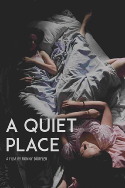
"A Quiet Place" takes the before-film threat of turning off your cellphone to a whole new level. While the horror film has a different take on the genre, or movies in general, by being almost completely silent, audience members are rewarded by their own silence because not only does the film compel the audience to watch continuously, it also promotes active listening by making those watching strain to hear any sound at all. The sensation gives a fresh taste to movie development.
When it comes to horror films, especially in today's current age, most are admittedly on the lousy side by being filling scenes with quick jumps and ugly creatures. The genre is always equipped with the sudden silence, notifying viewers that something terrifying is approaching and it's time to cover your eyes in fear. But what does one do when the whole film is silent and there's no signal that you're about to be terrified?
Running only 90 minutes long, "A Quiet Place" follows a family in what we can only assume is the future after the planet was hit by an extraterrestrial species. The quiet film, directed, produced, and co-written by John Krasinski, stars Krasinski himself and his real-life wife Emily Blunt as Lee and Evelyn Abbott (although their names are never mentioned) along with their three children. The oldest child, played by Millicent Simmonds, is deaf which is the stronghold for communication in the film which is all mostly done in American Sign Language. Although the film is advertised as being mostly silent, it is never truly silent because nature is never truly silent. In the opening scene, we are quickly introduced to the new world after we can only presume something happened to change common life. Text stating "Day 89" first comes on the screen, followed by a child running silently through a run-down grocery store. Within the first five minutes, without giving too much away, the family is brought to tragedy which plays out the rest of the story soon after when it then cuts to "Day 472".
Krasinski takes a different turn with his play on sound when he goes between two different viewpoints of hearing from the family's to the Simmonds' character. Expecting the oldest daughter to hear nothing due to her deafness, the audience insteads hears a loud, deafening roar whenever the film crosses into her point of view. This almosts causes the audience to feel as if their ears are filled with white noise and no longer are working properly - a genius play on Krasinski's part that foreshadows key moments later on in the film.
Later on in the film, if the audience hadn't already figured it out from the opening sequence, there's a shot of Krasinski in his downstair office trying to reach out to any other survivors from the apocalypse. Taped all over the walls are newspaper clippings showing headlines reading "It's Sound" and "They Can Hear You". If you read closer, the clippings state that the aliens arrived by a meteorite hitting Earth.
While the film plays on horror factors through the use of sound, Krasinski's real message behind "A Quiet Place" is the family bond and how even in the end of world, nothing is stronger than family. There are plenty of action scenes showing survival but the true beauty of it that made it entertaining for me was the day-to-day lifestyle of living in silence as they show in scene of the family sitting down for dinner and playing Monopoly afterwards.
"A Quiet Place" is a new, inventive take on the horror industry that fans have been lacking for several years. Who knew Krasinski had more talent than his beauty of playing Jim Halpert from "The Office". The film not only entertains but also brings the constant, busy lives of moviegoers to slow down and create its own "quiet place" within the theater walls.
"A Quiet Place".
GRADE: A.
Rated PG.
Running Time: 90 minutes.
This review of A Quiet Place (2016) was written by Luis G on 30 Apr 2018.
A Quiet Place has generally received positive reviews.
Was this review helpful?