Review of A Personal Journey with Martin Scorsese Through American Movies (1995) by Edith N — 02 Jun 2013
The Seminary of Cinema.
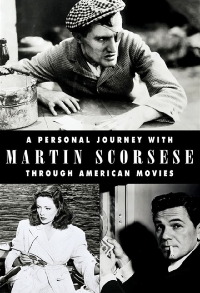
I'm not a huge fan of Martin Scorsese films. I don't dislike them, particularly, but he doesn't make movies for me. He makes Guy Movies. Oh, some of them are fine Guy Movies, and it's more than a little surprising that it took until 2006 for him to finally win an Oscar of his own (though most of the films he lost to have been excellent), and there are even one or two that I haven't gotten to yet and am seriously looking forward to. However, he and Coppola are both directors who make great movies that I don't like very much. Similar movies that I don't like very much, come to that. However, little though I may like his movies, I have to say that I'm extremely impressed by his knowledge of film history. It's come up in a couple of things that I've reviewed over the years, and I have to say, he's my prime example that a good director must know their film history in order to do a really good job--even if I don't always like the result.
When he was four years old, his mother took him to see [i]Duel in the Sun[/i] (or [i]Lust in the Dust[/i], as it is popularly known), because she wanted to see it herself but didn't want to admit it, and young Marty liked Westerns. He was fascinated by it in a way few four-year-olds would be. (I didn't finish it, myself; it's extremely silly.) For years afterward, he still thought he wanted to be a priest, but in reality, his future was set. What he is doing here is laying out how the films he saw shaped the films he later made. Some of them were movies he saw in revival, and some of them were movies he saw in initial release. It's obvious that he didn't know all of what he discusses here when he watched these movies as a child, but it's equally obvious that he worked out that it was what he needed to know in order to make good films himself. After all, you have to know who to imitate, if nothing else, and why people make the decisions they do.
Oh, don't get me wrong; I don't like all the movies he references here, either. As I said, I never did finish [i]Duel in the Sun[/i]. I finished [i]One, Two, Three[/i], but I thought it was considerably less clever and satirical than he did. Film is, as I think he points out but as I'm certain he knows, as individual as any other art. What moves me is not what moves you, and indeed, I can even see his point when he discusses what struck him about certain movies that I did not myself like. I think one of the truly important steps in being a good art critic, no matter what art you're critiquing, is learning how to tell "I don't like it" from "it's not any good." Both of them are valuable pieces of information, but they aren't actually the same thing. Now, the miniseries primarily focuses on films that Scorsese likes and that he thinks are good, and that's the way it should be. This is, after all, a [i]personal[/i] journey. But he's at least good enough to give you an idea of why he thinks the way he does.
Another valuable piece of the miniseries is his examination of what it means to direct a film and how that's shaped by the studio requirements. It's clear that he's too smart to believe in an unleavened [i]auteur[/i] theory. He may rhapsodize about the style Vincente Minnelli developed, but he also discusses the "house styles" of the various studios in the days of the studio system. There's only so much an [i]auteur[/i] could do in the hands of Daryl Zanuck, after all. I mean, these days, Francis Ford Coppola doesn't need the studios; he's got wine. (True--he has started paying for his pictures with the proceeds of the winery, which is definitely worth a visit if you're in the area.) However, there was a time when even just having final cut was so rare that only Charlie Chaplin had it--and he'd helped found his own studio. It seems one of the most important lessons a director can learn is that someone else is usually going to have more control than you.
I'm not thrilled at how close the closeup on Scorsese is when they're doing just interviews with him. However, the clips are generally well chosen, and he has interesting and articulate things to say. I wish I could have ever had the chance to sit in on a conversation about movie history with him and Roger; they both knew a ton and could speak about it intelligently and with enthusiasm. There are worse ways to learn about the history of cinema than to listen to either of them, and listening to both would have been incredible. And again, I really do seriously believe that anyone planning to make their own films ought to learn about what went before. [i]Birth of a Nation[/i] is hard to watch, but you still ought to at least once. And, of course, that's just a start. There's an interesting comparison of [i]Stagecoach[/i], [i]She Wore a Yellow Ribbon[/i], and [i]The Searchers[/i] that's worth watching all on its own. This cuts off when Scorsese started making his own films, but it's still a good place to start.
This review of A Personal Journey with Martin Scorsese Through American Movies (1995) was written by Edith N on 02 Jun 2013.
A Personal Journey with Martin Scorsese Through American Movies has generally received very positive reviews.
Was this review helpful?