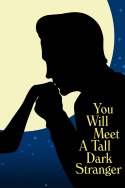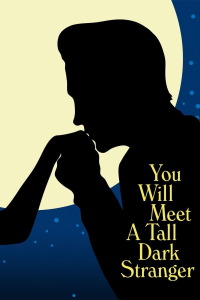
Review of You Will Meet a Tall Dark Stranger (2010) by Jennifer X — 29 Apr 2011
Nothing draws in a horde of old people like a new Woody Allen movie. The audience is largely composed of the same people every time, people who have learned to recognize the faithful constants - the jazzy score underlying the black screened credits (this time, Leon Redbone's "When You Wish Upon a Star"); the curly text headlining forever producer Letty Aronson ("his sister," the woman sitting in the third row whispers to her husband); the beachy, peachy hues recalling a time and place that never existed, and - in recent years, the annoying voiceover narration opening the first scene that introduces the young protagonista, Sally (Naomi Watts, "King Kong").
Woody Allen's latest, "You Will Meet a Tall Dark Stranger," starts off swimmingly, following an artsy upper-crust British family that twists and turns its relationships with the ease of a French silk scarf. Crowded with almost as many stars as "Valentine's Day," the film is better introduced by the actors' names rather than by the confusion of their characters' - Watts, Josh Brolin ("Milk") as her failed-author husband, Antonio Banderas ("Shrek") as her sexy art gallery boss, Gemma Jones ("Bridget Jones's Diary") and Anthony Hopkins ("Beowulf") as her recently-divorced parents trying to stave off their inevitable decay into old age, Lucy Punch ("Hot Fuzz") as Hopkins's new wife and Frieda Pinto ("Slumdog Millionaire") as the alluring young neighbor.
To any newcomer, the mélange of star power might seem a bit overwhelming, but Woody has always been good with ensemble casts, and "Stranger" is no exception. And truly, at least for the first few moments, the director seems back in his prime, comfortably zinging through his well-worn topics of discontent, neuroses and nebbish insecurity with relative success. Feelings of cosmic insignificance in the universe? Check. The rise and fall of marriage? The tragedy of the conflicted writer? The supernatural as farce? Check, check, check. Granted, the chemistry between the lovers is kind of lacking, and the fights are not very tense, but you know, all that is forgivable - it's a light enough movie to get by.
Then it ends. Seriously, it just ends. And what's more, this is the gem "Stranger" chooses to close off with: "Sometimes, the illusion is better than the medicine." What is that even supposed to mean? Never in the history of moviemaking has an ending been so sublimely ill-placed. Was Woody simply too lazy to come up with a proper third act for his latest film? Or, gasp, was he simply not capable of thinking of one?
Had it come from any other modern director, the film's sparkling high points would certainly have overridden any negativity derived from the ending. Yet from Woody, it's a certifiable flop. Sure, we get a few laughs, a few fresh faces (Punch is particularly promising as the prostitute-come-diamond-swathed-trophy-wife of Hopkins, recalling the fervor and grace of a young, dizzy Mira Sorvino), some faithful droplets of neuroticism twisted into the central plot - all that stuff we've come to expect from every Woody Allen film since 1977.
Yet the thing that's lacking from "Stranger" - that's been lacking from every film since "Sweet and Lowdown" - is the brief leak of emotions, the chill of realization that has become the heart and soul of all Woody classics: Allen's pregnant pause in "Annie Hall" before he mourns "Annie and I broke up;" the "What makes life worth living?" speech in "Manhattan;" Dianne Wiest's soft and tender "I'm pregnant" in "Hannah and Her Sisters." But what exactly have the aughts yielded for us? Threesomes and murder? Even the decade's best, the nubile "Match Point" and "Vicky Cristina Barcelona," are missing that brief descent from sexy fantasy-romp into reality.
In fact, "Stranger"'s absent ending isn't so much an anomaly as it has become a growing constant of its own, as distasteful to the audience as the grating voiceover narrations. These shifting constants mark the tragic realization that we all don't want to admit: that the world is no longer relevant to Woody. And what's worse, that Woody is no longer relevant to us.
Not that this news will make the flock of Woody aficionados (and particularly, um, this reviewer) attend any fewer of his films, as the numbers in the box office can attest to. Our commitment practically mirrors the constants of a Woody Allen movie: When the film ended, there were claps in the audience, because there are always claps. When the lights went up, people stayed on afterwards to watch the credits, because they always do.
With each new movie around the corner, all we really want to see is "the next great Woody Allen movie," and we are willing to wait for it until the day we die. Maybe that masterpiece will come, and maybe it won't, but in the meantime, all we can do hold onto the constants - these glimmers of past greatness. Because for us, the illusion is better than the medicine, any day.
This review of You Will Meet a Tall Dark Stranger (2010) was written by Jennifer X on 29 Apr 2011.
You Will Meet a Tall Dark Stranger has generally received mixed reviews.
Was this review helpful?