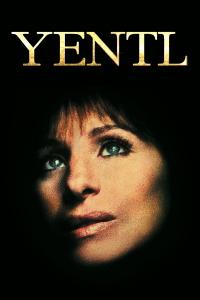
Review of Yentl (1983) by Daniel A — 08 Mar 2011
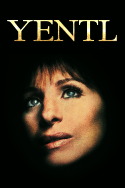
Long before the Academy awarded Kathryn Bigelow her Best Director Oscar in 2010, the Golden Globes had given their first female Best Director award more than twenty five years earlier. The woman to receive such an honour? Barbra Streisand.
No matter what your opinion of her, there can be no denying that Ms. Streisand is one talented lady. A fine actress of both stage and screen, multi Grammy winning recording artist, and a director too. Yentl is testament to her ambition and fearlessness as an auteur. However unless orthodox Jewish, gender-bending musical-dramas are your particular preference, Yentl might not be a film you particularly enjoy.
The story follows Streisand's Yentl, a brash but intelligent girl who wishes to spend her days studying Jewish scripture rather than tending to household chores; something frowned upon in Orthodox Judaism. Following the tragic death of her father, she cuts her hair and dresses as a man in order to enroll at university and become a scholar. Naturally this leads to a complex web of deceit, as Yentl falls in love with her classmate Avigdor (Mandy Patinkin), and herself becomes the object of desire for a young woman named Hadass (Amy Irving). What unfolds is a deepening triangle of love and lies that escalades to startling levels before Yentl admits the truth. Throughout the film Streisand narrates her character's inner monologues through a series of musical numbers, though few stand out. Most notable is 'Papa, Can You Hear Me?' which has become easily the most famous song from the soundtrack.
As a challenge to traditional gender roles and the pure primitiveness of such extreme patriarchal society, Yentl manages to get its message across fairly well. It's honest and heartfelt, and shows the lengths some are willing to go in order to achieve equality. However the biggest problem here lies in the fact that Streisand is so clearly a woman in every scene. Fair enough, I can imagine that some of the men in the academy may not notice her lack of facial hair and womanly voice, but the only person in the entire film who suspects anything is a half-blind old lady. While I know the story is much more about what Yentl's cross dressing represents rather than how good it actually is, I couldn't help but be distracted by how glaring this problem is, and as such felt the credibility of the film suffered. Similarly I found it hard to agree with Yentl's constant avoidance of telling the truth. She is given a number of opportunities to come clean, but instead takes the cowardly route, allowing her ruse to grow bigger and more damaging to those around her, even going to the extreme of marrying an unsuspecting young girl to avoid coming clean.
As such I found Yentl a frustrating film. Though I admire Streisand's talents as both director and actress, as well as her intentions with the story, I found the complete lack of believability a real hindrance to my enjoyment of the film. Also as a musical the film fails to capture the essence of what made Streisand so wonderful in Funny Girl for example, and with the exception of one or two, the songs all sounds very similar.
This review of Yentl (1983) was written by Daniel A on 08 Mar 2011.
Yentl has generally received positive reviews.
Was this review helpful?