Review of Winter Light (1963) by Reece L — 31 Oct 2015
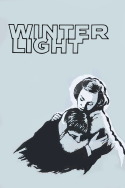
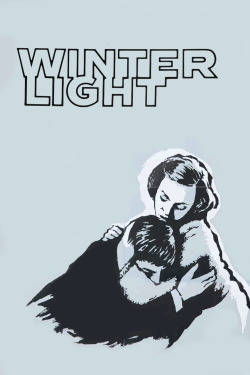
Winter Light opens on a congregation of people reacting to a sermon in varying ways, some ambivalent, some falling asleep, some moved, some operating purely out of routine. The congregation leaves and in the absence of human contact, the pastor, Tomas, sits alone and considers god's silence, feeling spurned and remorseful. He closes himself off from relationships due to his lack of existential purpose, pushing away his loved ones and retreating into his despair. A man feels the same way, hopeless in an environment of nuclear paranoia, and kills himself. Tomas and his lover wrangle with each other, one open to love and the other completely opposed to something so substantive in a world of pointlessness, until they both decide to continue on for the sake of it. Tomas continues to serve as pastor despite his lack of faith.
Religion is arbitrary and empty, begging the question of why we continue to live in an unsure world where all we have to go by are stories and silence. We're indoctrinated at a young age and go from there with the ingrained feeling that to forsake your god is to die. But ultimately, if god does exist, god forsook us first.
Bergman addresses these ideas by bringing his signature subtext to the forefront, putting aside filmic modes of communication and allowing his flesh and blood characters to do the work for him by way of speech and interaction. The result is his most honest, emotional, and genuinely affecting film, a spiritual sibling to Antonioni's L'Eclisse in its assessment of human relations set against a backdrop of nuclear holocaust and its positioning of man as existing in an existential contradiction that is ultimately unknowable.
Bergman said he found himself through Winter Light, a sentiment easy to identify with after having experienced the result of his crisis of identity.
This review of Winter Light (1963) was written by Reece L on 31 Oct 2015.
Winter Light has generally received very positive reviews.
Was this review helpful?