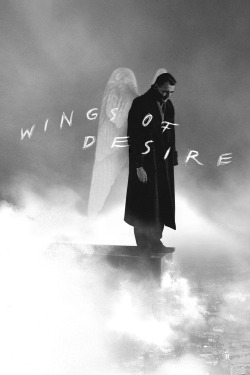
Review of Wings of Desire (1987) by Alejandro V — 21 Dec 2008
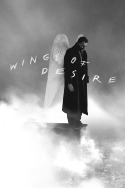
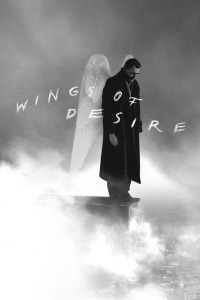
'Wings of Desire' is the type of fantastical, obscure-sounding film that critics slip into the top 10 movies of the 1980s, yet few people have heard of, let alone seen. That's because it's not a bombastic action film, hard hitting drama or seminal work to fuel the post-modern cannibalism of every film in the following decade. Instead, it's an intensely quiet, languid and impersonal film every bit as lyrical as its title.
Wim Wenders had shown his considerable talent with his previous features, especially to Western cineastes with 1984's 'Paris, Texas'. Returning to his native Germany, seeing the damage of the War still strewn about Berlin and with a creaking relic of the Cold War, which by now seemed to be in its final hour, Wenders perfectly timed an introspective glance into the heart and soul, of the individual and the public, the formal and informal, from the top to the bottom of the heap. Enlisting the linguistic wizadry of Peter Handke to put sublime sounds to Wender's equally soaring images, and putting in some wonderful German actors (and a trump American), and what became was something approaching true cinema.
What most people will notice on viewing 'Wings of Desire' is the extraordinary poetic language both spoken and narrated throughout the film. In typical German style the process of familiarity is established through the enormous accumulation of details, and small descriptions of everyday things pop up in sequences or lists, makingone think about why such things are mentioned. A singular poem is a recurring motif, emphasisingthe child-like wonder and re-evaluation of the world and oneself people encounter every now and again in their lives. People's thoughts murmur and develop sleepily across the scenes, prickiling at the theme of lack of communication, which is contrasted by the constant acknowledgements of the angels themselves.
Indeed, Wender's visuals are every bit as prosaic as the words that fill the air. The black and white cinematography is playfully manipulated to emulate the style of German Expressionist cinema, sneakily referenced during the opening credits. Light and shadow dance around each other and whirl around the characters, picking out bits of clothing or particular angles. Then, when the world bursts into colour a real sensation of joy is felt as Ganz's 'Damiel' relishes the world of the living, and Berlin appears not as a horrific manifestation of the angst of the psyche but as a rich world of unexplored details. It's the details in life that are stressed to be the most important, in both understanding and enjoying life.
Through it all though, it's the people who bring the real humanity to the film. All stalwarts of German acting talent, of course the main joy is Bruno Ganz. Soft-faced and with a gentle giant demeanor, he's everyone's ideal guardian angel. What's most effective is Ganz's eyes, which seem so friendly that even in black and white they exude a powerful warmth. And his wonderful performance here is enhanced somewhat by his other iconic performance 17 years later, which kind of comes back to the existential questions and suggestions of Wender's matserpiece. Then there's Columbo himself, fitting in snugly amongst the European high art and conveying the same strange but beautiful warmth and cuddliness everyone else conveys.
This is one of those rare films, like Miyazaki's 'Spirted Away' or Powell and Pressburger's 'A Matter of Life and Death', where you can watch it 100 times, never truly understand what it's about, but fall in love with it each time anyway. It's a tremendously crafted, performed and photographed masterpiece of celluloid, and even if the end speech drags a teensy bit, there's nothing in this that drags it down. A breath of fresh, pure air.
This review of Wings of Desire (1987) was written by Alejandro V on 21 Dec 2008.
Wings of Desire has generally received very positive reviews.
Was this review helpful?