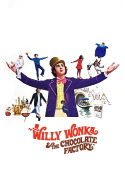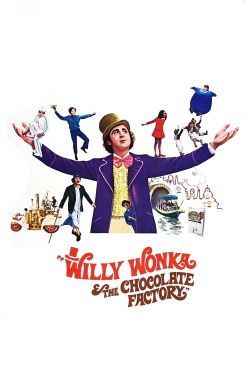
Review of Willy Wonka & the Chocolate Factory (1971) by Ken C — 12 Jun 2013
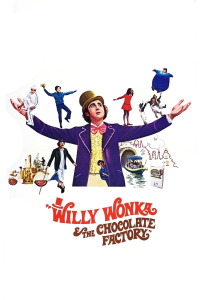
If I were a child and had the resources to watch Willy Wonka & the Chocolate Factory at any time I desired, I would sell the resources in trade for chocolate. If chocolate was unavailable, then the next best option is to watch the film non-stop. Based on the Roald Dahl novel of a similar title, this is one of those children's movies with the guts to challenge the endurance and fear of both kids and adults, all while staying highly optimistic and teaching practical morals by the end of the film. When examining the film as a whole, there is not a single flaw.
Pardon any potential bias, as Willy Wonka happens to be one of my favourite movies from my childhood. The opening sequence of cocoa beans being grinded and turned into chocolate is so sweet that you may be taken by surprise by the direction of the film. The story is primarily set in the heart London, UK, where both Willy Wonka (Gene Wilder) and Charlie Bucket (Peter Ostrum) reside. Willy Wonka is a highly acclaimed candy man who, after years of isolation within his chocolate factory, is re-opening his workplace to the public, but only to five lucky people that find a golden ticket inside a wrapped Wonka bar. His reasons for living in isolation are that many spies, particularly Slugworth, have been aching to steal Wonka's recipes. You may be thinking, "That's rather odd, even for a live-action children's film." Did I mention the golden tickets?
The first mention of the golden tickets results in a teacher dismissing a whole class, of which Charlie happens to be a student. Charlie Bucket is a hopeful young lad living in poverty with his widowed mother and four grandparents who never even leave their shared bed. He works diligently and honestly to make his bread, an item considered a luxury in the Bucket household. He buys into the golden ticket hype, promising his family that he will find the ticket. His mother wants all the best for Charlie, but also reality-checks him when he dreams too highly. Grandpa Joe (Jack Albertson), however, does not try to do anything that may destroy the hopes of his only grandson.
The relationship between Charlie and Joe is very tender. Something about a grandfather-grandson relationship automatically overcomes potentially trite character development. Jack Albertson and Peter Ostrum both do well in their roles, minus an annoyingly fake accent Ostrum equipped. The depressing story of Charlie's living standards is merely a tool used to preach the many morals that the film offers. Lo and behold, Charlie does find a golden ticket and may go to the chocolate factory with Grandpa Joe for inspired fun! The coincidences may be too convenient for more serious movie viewers, but for a children's film, it works well and does not overwhelm the thrilling experience the film offers.
When the golden tickets are first unleashed, we meet all sorts of crazy characters from around the world, the craziest being Veruca Salt. She has her father so whipped that he has given the workers of his peanut factory a new task: to "un-shell" Wonka bars until a golden ticket is found. The craze is so ridiculous that you have to perceive it as social commentary on poor media coverage and sheep-like nature of the human masses. This satirical bite oddly holds up better in our era than back in the seventies. The entire pre-Wonka trip is hilarious fun, for both children and adults. This is a personal favourite piece of dialogue, between a wife, whose husband was kidnapped, and an FBI agent, after speaking to the kidnapper:
FBI Agent: "It's your husband life or your case of Wonka bars!".
Wife: "...How long will they give me to think it over?".
The absurdity does not even reach its peak until Willy Wonka is on screen. Gene Wilder has always been an artisan in sarcasm, and it shines ever so brightly here. You can see that he genuinely cares about the safety of his guests, but he does not hesitate to mock when any one of them acts bone-headedly. The years of isolation may have turned Wonka into a lunatic, or maybe it is all an act. Who knows with Wonka? He has enough maniacal charm to attract children, and plenty of wits to tickle adults' fancies.
The dramatic change from the poor suburbs of London to the lush, sticky-sweet center of Wonka's factory was eye opening for me, as a youngling. There is a chocolate RIVER. Shut up and take my money. The sets are all truly dazzling, and for the early seventies, the special effects are passable (as seen during the Wonka Vision scene). One element of the film that most people neglect is that it is a musical. The choreography is not musical-like at all, but the imagery is as vibrant as contemporary Disney works were. Inspired songs also help. Little orange factory workers, who call themselves Oompa-Loompas, sing all the secondary morals in separate one-minute stanzas. Maybe most kids only remember the chorus, "Oompa loompa, doo pa di doo," but we liked our pandering, now and then.
For all of the candy in the film, Willy Wonka & the Chocolate Factory is hardly sugarcoated. What pandering there was prevented our innocence and dreams from being destroyed through one film. By the end, the film was explicitly encouraging us to preserve our dreams, even at the stage of adulthood. The hardest scene to watch, a boat ride, is not too boring, but too crazy. To parents, at some point, you will have to condition your children to seeing things that may frighten them. The boat ride is a good place to start.
The morals are all good-natured and hit at home, without intruding on the mad fun there is to have during the film. It has aged surprisingly well, after over forty years of triumph. With catchy tunes, memorable characters, clever one-liners, and dream-like imagery, there is no audience to whom I could not recommend this fantastic film. I would go into even more detail about this film, but there is so little to do and so much time... Wait. Strike that. Reverse it.
This review of Willy Wonka & the Chocolate Factory (1971) was written by Ken C on 12 Jun 2013.
Willy Wonka & the Chocolate Factory has generally received very positive reviews.
Was this review helpful?