Review of What They Had (2018) by Bertaut1 — 14 Mar 2019
Overstays its welcome, but the acting is terrific.
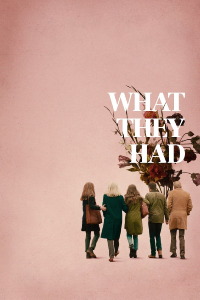
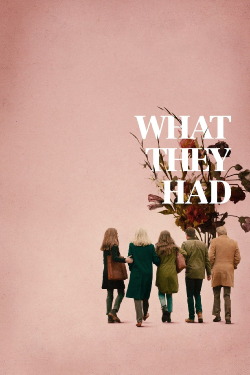
The debut film of writer/director Elizabeth Chomko, partly based on her own experiences with her grandmother, What They Had depicts a family trying to deal with the horrors of Alzheimer's. Very much in the tradition of films such as Iris (2001), Away from Her (2006), and Still Alice (2014), What They Had attempts to avoid becoming too lachrymose by finding humour in the condition and focusing on how the family are ultimately brought together rather than torn apart. It's not perfect, of course, running a good ten minutes too long and straying into melodrama more than once, but for all that, it's still a fine film, with a superb cast doing exceptionally truthful work.
Set in Chicago, the film tells the story of Ruth (Blythe Danner), who has stage six Alzheimer's, and her family; husband Burt (a career-best performance from Robert Foster), son Nick (Michael Shannon), daughter Bridget (Hilary Swank), and granddaughter Emma (Taissa Farmiga). Nick wants to put Ruth in a "memory centre", but Burt won't hear of it, and Nick hopes that Bridget will back him up, as she has power of attorney.
Ruth isn't the central character within this, and her disease is not the focal point; this is a film about a family in crisis, a crisis precipitated by her illness, but fuelled by their own personal problems. Nick has sunk every penny he owns into a bar that isn't doing too well; Bridget is increasingly dissatisfied with her career as a chef and her marriage to a man who was essentially chosen for her by Burt; Emma has little to no interest in remaining in college; Burt disapproves of Nick's unmarried status, and believes Bridget's unhappiness stems from her lapsed Catholicism. One of the strengths of Chomko's script is how deftly she handles the presentation of emotions, with the audience empathising first with one character and then another, with no one depicted as completely right or completely wrong.
Another strong aspect of Chomko's script is how she is able to generate laughs from Ruth's condition. At one point, Ruth announces she's pregnant, and Burt tells Nick that in anticipation of the arrival, they've got out all his old baby things. In another scene, a solemn Nick tells Bridget that Ruth hit on him, but Bridget is unable to keep a straight face, and the two end up laughing hysterically. At church, when Emma informs Nick that Ruth has just drunk the holy water, he quips, "at least she's hydrated." When a telephone rings in the apartment, Ruth enters the room holding a stapler to her ear, complaining that she can't hear anything.
As Ruth, Blythe Danner gives a pathos-rich lyrical performance in which she must react to everything without registering anything. Foster plays Burt as a bully, albeit not a self-aware one; he has no idea how much ideological authority he wields over his children, but the strength of the performance is that he is not a bad man; he thinks he has done right by his children. Despite his bravado and machoism, however, his most salient characteristic is his unwavering love for Ruth. A scene of them exchanging Christmas presents is as poignant a scene as you're likely to see all year. Bridget is, by definition, a passive character for most of the film, but Swank gets a lot of mileage out of playing her inner turmoil; she very much wants to assert herself, but something constantly holds her back. Shannon, doing arguably his best work since Revolutionary Road (2008), plays Nick as utterly exhausted.
However, a number of factors hold the film back. Firstly, like most films about Alzheimer's, it depicts the condition as not quite as bad as it really is (Ruth never becomes violent, for example). Chomko also makes a few directorial misjudgements. For example, the final scene features a truly bizarre bit of on-the-nose symbolism more likely to elicit laughter than anything else. Speaking of the end, there are about five scenes which could legitimately have served as the dénouement, with the film running a good ten minutes too long, and missing a chance for a really powerful final impression, ending on a beautifully poignant comment by Ruth.
These few issues aside though, this is an impressive debut. It's not the best Alzheimer's movie ever made (thus far, that is Away From Her), but it's a fine addition to the subgenre. Chomko elicits excellent performances from the central quartet in what is definitely a heartfelt film, which you could do much worse than to seek it out.
This review of What They Had (2018) was written by Bertaut1 on 14 Mar 2019.
What They Had has generally received positive reviews.
Was this review helpful?