Review of We the Animals (2018) by Bertaut1 — 22 Jun 2019
A poignant and poetic evocation of childhood.
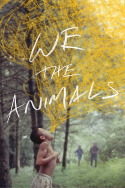
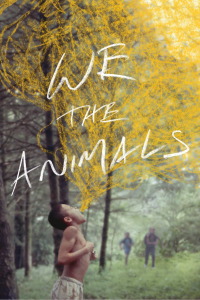
A remarkably contained and intimate story featuring only five main cast members, We the Animals is about a young boy awakening to his homosexuality. Equal parts lyricism and grittiness, the film looks at how the crystallising of one's perception of the world goes hand-in-hand with a loss of innocence. Less concerned with narrative beats and character arcs than with tone and visual poetry, the film operates in a similar magical realist key as Beasts of the Southern Wild (2012), whilst also calling to mind the Texas scenes of The Tree of Life (2011). And although the narrative could be accused of being a little insubstantial, this is an effective and poignant evocation of childhood.
Set in upstate New York in the 1990s, the film tells the story of nine-year-old Jonah (Evan Rosado), who lives with his Ma (Sheila Vand) and Paps (Raúl Castillo), and two slightly older brothers, Manny (Isaiah Kristian) and Joel (Josiah Gabriel). Existing just above the poverty line, the family is tightly-knit but dysfunctional, with Ma and Paps both prone to lashing out violently. When a neighbouring boy shows the brothers a porn movie, Jonah is taken aback when he reacts so strongly to a brief clip of two men having sex.
We the Animals is the fiction debut of Jeremiah Zagar, and was written for the screen by Zagar and Daniel Kitrosser, from Justin Torres's semi-autobiographical 2011 novel. Much like the novel, rather than presenting a classically structured plot, the film is instead composed of vignettes presented in a broadly chronological manner. Essentially a bildungsroman, the film covers some of the same thematic ground as Moonlight (2016), albeit it with a more esoteric tone. In a similar manner, although its depiction of the brothers' mischief recalls The Florida Project (2017), We the Animals is far more lyrical.
Initially the trio are presented as relatively indistinguishable from one another, but this begins to change as Jonah's self-awareness grows and he begins to withdraw from his siblings. At the same time, the voiceover narration becomes less frequent. Tied into this are the crayon pictures which he draws which change from innocent doodling to sexualised and violent images. Also important is how well Zagar uses the mise en scène to suggest psychology; as the film progresses, we see less of Jonah huddled under the bed covers with his brothers, and more of him alone under his bed. Zagar's documentarian background is also noticeable in his use of the techniques of cinéma vérité. In terms of focalisation, the film is tied rigidly to Jonah's perspective. In a general sense, this can be seen in the frequency with which cinematographer Zak Mulligan places the camera at Jonah's eye level. A more specific example involves a scene when Paps is arguing with another man off-camera; we can hear the voices, but not clearly, because neither can Jonah. Also important is that the film is shot on grainy Super 16, predominately with wide lenses and a shallow depth of field, robbing the image of sheen and depth, and thus foregrounding the impreciseness of memory, as if we are looking at events through gauze, half-remembered and half-embellished, as if there is no distinction between past and present, which reminded me a little of Mirror (1975) and Distant Voices, Still Lives (1988).
Thematically, although the film deals with domestic violence, Paps isn't the only one guilty of such behaviour; Ma is also shown as possessing a violent temper. Some of the dialogue also carries darker implications. For example, Ma tells Jonah that when children are 10, they leave their parents, asking him, "promise me you'll stay mine forever." When he asks how, she says, "you're not 10, you're 9+1". There's a beauty to this sentiment, but so too is there something unhealthy about it.
In terms of problems, for all its lyricism, the film never really says anything new, and it suffers in comparison to masterworks such as Tree of Life and Beasts of the Southern Wild. Another issue is that there is a sense that Zagar is more interested in lyricism than emotion; in trying to convey Jonah's interiority through abstract visual poetry, he neglects the issue of emotional realism. This should be a heartbreaking film, but it isn't, mainly because the characters exist primarily to facilitate philosophical musing, rather than as unique entities in themselves.
That aside, however, We the Animals is an impressive debut. Very much focused on the impressionistic and chaotic nature of memory, it depicts a young life yet to be fully formed, with its inconclusive ending reminding us that life doesn't have a three-act structure. And this might be the film's crowning achievement; in a story about the past and how we access it, the final impression with which it leaves us is that we can never know what lies in our future.
This review of We the Animals (2018) was written by Bertaut1 on 22 Jun 2019.
We the Animals has generally received positive reviews.
Was this review helpful?