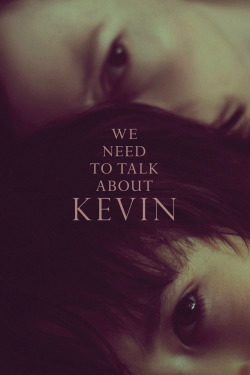
Review of We Need to Talk About Kevin (2011) by Sean F — 13 Nov 2012
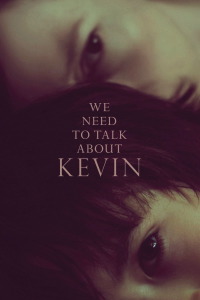
Art films often require that a chance be taken on the part of the audience. I think that this is why audiences sometimes avoid them; when you buy a ticket to The Amazing Spider-Man, you more or less know what youâ(TM)re getting. When you buy a ticket to The Tree of Life, youâ(TM)re taking a chance on something that reaches farther and may, as a result reward you more. I took such a chance recently with We Need to Talk about Kevin, and unfortunately, the chance was punishing.
We Need to Talk about Kevin stars Tilda Swinton as Eva, at the bottom of a downward spiral. Sheâ(TM)s living alone, overmedicated, drunken, her community hates her, and her son Kevin is in prison. Through flashbacks, we see how she got here. Kevin was conceived through a passionate commencement of what was most likely destined to be an affair. Her husband Franklin is played by John C. Reilly, and we see fragments of her life with Kevin, as he is a baby, again when heâ(TM)s 6, and then when heâ(TM)s 16. We see the signs of a tragedy on the horizon, and I wonâ(TM)t spoil what that is for you; you can figure it out pretty easily.
There is ample material here for a powerful drama, but We Need to Talk about Kevin squanders its potential. The first mistake that the movie makes is that it lacks any semblance of conflict. Little Kevin is evil. No, I mean REALLY evil. As a baby, he cries constantly, but only at Eva. As a 6-year-old, he refuses to communicate with her and provokes her into breaking his arm (trust me on this one). As a teenager, heâ(TM)s openly hostile. Thereâ(TM)s a single scene that seems to suggest that they will finally get along, but the movie suddenly resumes its unending stream of cruelty to Eva.
While this does stretch plausibility, the bigger problem is that it makes the movie completely predictable. We Need to Talk about Kevin may not be intended as psychologically realistic, but any kind of fiction needs a possibility that its events will turn out more than one way. Here, we see the ending coming a mile away because thereâ(TM)s nothing to suggest anything else will happen. The third act of the film holds a fair amount of power as is, but because itâ(TM)s inevitable, it doesnâ(TM)t matter.
The second problem is the movieâ(TM)s style. I know, I know, art films need to be bold, but were We Need to Talk about Kevin a mainstream horror film, the crushingly obvious choice of soundtrack and endlessly recurrent use of the color red would be criticized as amateurish. Shots draw attention to themselves, like when Eva, pregnant, walks down a hallway as a group of young ballerinas run past her. We get it.
The praise I can laud upon the film is hampered by these last two points. Tilda Swinton is a magnificent actress, and sheâ(TM)s as good here as she is anywhere else. John C. Reilly and Ezra Miller are also effective. And the style, while annoying, is basically technically competent. But a movie needs more than good performances; it needs a world that we can believe in, and thatâ(TM)s where We Need to Talk about Kevin fails. If you want to see Tilda doing great work in a better movie, check out Julia instead.
This review of We Need to Talk About Kevin (2011) was written by Sean F on 13 Nov 2012.
We Need to Talk About Kevin has generally received positive reviews.
Was this review helpful?