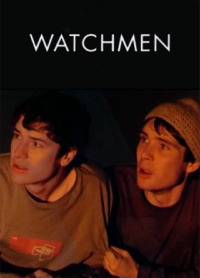
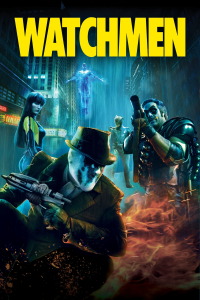
Review of Watchmen (2001) by David D — 15 Jul 2017
My first impression of Watchmen came before the DC "Extended Universe" was underway. I had never read the graphic novel (still haven't). But I did like the comics genre, and director Zack Snyder had done something interesting with 300. So I gave Watchmen a shot and was ... unimpressed.
I didn't hate it. I didn't love it. I probably would have forgotten it. But now a Watchmen TV show is in the works, Zack Snyder is a (much criticized, often unfairly) driving force in the DCEU, and the Watchmen are back in the comics scene. It seemed like a good time for a second screening.
On the surface, there's a lot to appreciate here. It's lovingly crafted by filmmakers with a passion for the source material. It has massive attention to detail. It's visually inventive. If it were about characters we knew and loved, it might nothing short of epic.
And it is epic in scope, but not in impact. We're thrown into an alternate reality where superheroes are real and even helped win the Vietnam war. As the President who won that war, Richard Nixon is in his fifth term. Superheroes, however, are outlawed, except for Dr. Manhattan, who replaces "Mutual Assured Destruction" to keep the cold war from turning hot.
The movie is also epic in length, and begins to feel a little self-indulgent. We get flashbacks and backstories from the 40's to the 70's before we really even understand the alternate 80's we've been thrown into. Sometimes it takes a moment to discern whether a scene is flashing back or moving forward. Maybe it would help if you're familiar with the graphic novel, but the narrative structure is just not going to work for everyone.
Watchmen preceded Deadpool and Logan on the R-rated comic book front, and earns the R with violence, sex, nudity and language. But in Watchmen, the R-rated content isn't for laughs, and sometimes it's a bit uncomfortable.
In fact, it's hard to find sensibilities with which to get comfortable in this movie. These are all anti-heroes, without a single character in the film to latch onto as a virtuous hero just trying to do the right thing. Several of the heroes are straight up killers. One is an attempted rapist. The movie's primary love story is an adultery tinged triangle.
Despite dealing with Vietnam, Richard Nixon and the Cold War, the politics are similarly non-committal. No one's particularly wrong or right. The end justifies the means in a world where you must do terrible things to stave off even worse things. That world is part of what makes it difficult to connect with the film. Written just a year before Ronald Reagan's "tear down that wall" ultimatum, Watchmen was written in a world that knew all too well the existential threat of nuclear war with the Soviets. As such, Watchmen is adapting a story which cannot be told apart from the sensibilities of those who lived through the 60's, 70's and 80's. Perhaps the very themes that made Watchmen resonate so powerfully with readers in 1986, make it difficult to connect with today.
Many people, perhaps most, will find Watchmen inaccessible. But maybe it's unfair to criticize it for having an unconventional structure or pace. Zack Snyder wasn't trying to make a conventional movie. He was trying to adapt a specific piece of pop culture, one many had called "unfilmable," to the silver screen. The late Roger Ebert said that he rated a movie based on whether it succeeded in what it was trying to do. By that measure, Watchmen may be very successful (and Ebert did give it four stars).
Perhaps if Zack Snyder's other movies were rated in this spirit, his DCEU movies would fare better with the critics.
This review of Watchmen (2001) was written by David D on 15 Jul 2017.
Watchmen has generally received positive reviews.
Was this review helpful?