Review of Walkabout (1971) by Brett C — 06 May 2014
Australia is a beautiful place and things have changed since this film was released. The country has become more diverse and the attitudes towards different cultures have improved, this is not to say that it's perfect as I still feel we are far from that. Australia has always had this internal conflict between the Caucasian settlers and the Aboriginal people. The Aboriginal people have suffered so much after the settlers possessed the country as their own, with the biggest problem being Assimilation. These Indigenous people over time has started to lose their culture due to the restrictions that were placed on them, and instead taken up the values and ideas of Western society. This caused them to lose their sense of identity and importance to the land. Nicolas Roeg's Walkabout tackles these ideas and shows us that their way of life is actually of great value and that the first step on making the country better is to build that bridge between the two cultures.
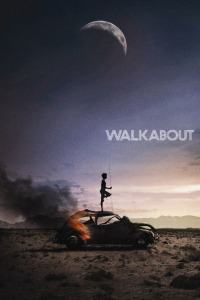
The film's screenplay was written by Edward Bond, and it was based off a novel written by James Vance Marshall. Walkabout tells the story about two people, a teenage girl and small boy and are siblings, stranded in the middle of an Australian desert and they are trying to get back to civilisation. In the middle of their journey, they meet an Aboriginal boy, who is roughly around the same age as the girl, and aids them in reaching their destination. The Aboriginal boy was in his "Walkabout" because this is his culture's rite of passage in transitioning to adulthood. The film's title doesn't necessarily refer to the Aboriginal boy's transition but also the two stranded siblings. They are also in an age where they would be transitioning into a new phase in life, with the little boy heading towards in becoming a teenager and the girl becoming an adult. This film is mostly concerned about the journey rather than the destination, concerning more on the development of the characters. We are able to see these characters somewhat grow as they spend more time with the Aboriginal boy, starting off as being condescending and prejudiced then becoming more tolerable and more accepting of the other's way of life. It sounds like something that has been done many times before, just with different subjects, but it's Roeg's execution that makes it so effective. Roeg doesn't make it sappy and overly dramatic. Yes it changes the characters, but it doesn't completely define them, as they will still be human who have human flaws. During the film's third act, our three characters undergo a realisation of about culture and Roeg placing the white Australians under judgement through the perspectives of the film's three lead characters. The events that happen in the third act were heartbreaking as the Aboriginal boy watches the white Australians shoot down animals showing no effort whatsoever. This scene paints a beautiful picture and connection with their troubled history, losing their sense of self-worth and identity. While the siblings on the other hand started to see the flaws of their own society; lacking in any form of compassion and their unnecessary need of materialistic possessions in order to define themselves and to show that they are a higher form of species. I adored the idea of having the film's characters be nameless as Roeg is trying to emphasise an idea that having names doesn't accurately represent us, instead it's the culture, values and actions that defines who we are.
The film's director, Nicolas Roeg, also acted as the film's director of photography and I believe he did a wonderful job with this film. Roeg truly captures the essence of the Australian bushland, through gorgeous shots of the natural sandy rock formations and the boiling red sun shining down on it's characters. Along with these are shots of the desert's living inhabitants like Wombats and Kangaroos that supports the idea of a land of pure natural things, stripping away the artificiality that plagued the life that the siblings were living in. The cinematography also achieves in creating that sense of hallucinations that are common when walking under extreme heat in the desert.
The film features a score composed by John Barry, who was notable known for his works in the James Bond series. Barry's score for Walkabout was great, as he truly understood the Australian culture of both sides. The score features two different types of styles, one would be the regular orchestral score that is commonly found in films, and the others were musical pieces that take in the instruments of the Indigenous Australians; using instruments like the Didgeridoo and Clapsticks. By using these instruments, it keeps the film feeling authentic and drawing us in the experience of being in Australian land.
The film's acting was quite good with decent performances from Jenny Agutter as the older sibling and Luc Roeg as the younger sibling, with David Gulpilil as the Aboriginal boy. Roeg used actors that were able to give a natural performance in order to have the film's ideas be clear and in order to prevent the film from feeling romanticised.
I think because I live and schooled for most of my life Australia, I was able to have some sort of connection with the film. I can completely relate because I have read and learned so much about it, that seeing it on screen makes it even more heartbreaking than it already is. Walkabout is a film not just for Australians but for anybody living in any country, especially if there was a history of foreign civilizations taking over indigenous land or even as simple as a constant power play between two cultures in everyday life.
This review of Walkabout (1971) was written by Brett C on 06 May 2014.
Walkabout has generally received very positive reviews.
Was this review helpful?