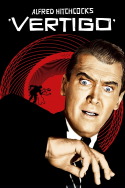
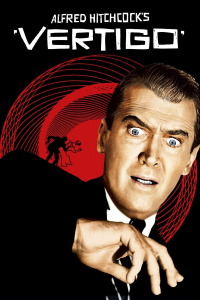
Review of Vertigo (1958) by Ruth L — 11 Feb 2012
The working title for this classic ("Darkling I Listen"), taken from Keats' "Ode to a Nightingale", may well have proved just as riveting, though longer when compared, as Vertigo itself. Keats' obsession with the nightingale, as a means of escapism from madness, is itself comparable to Scottie's fragile love for Madeleine. But while Keats and Scottie both experience madness, their means of escapism are towards two different ends: the one towards a sort of Platonic Love for the Idea of Nature, the other towards Erotic Love for a woman who never really was - obsession at its finest. Which explains why the film's title - Vertigo - may well have been Hitchcock's best decision with regards to his greatest work.
Critics and viewers alike today rank the usual things - Stewart's and Novak's non-Oscar nominated performances that are among the finest in film history, music that resonates with perhaps the most fabulous work of obsession (Tristan and Isolde), Saul Bass' opening titles that grab us from our seats, and last but not least, the surprise ending that would have compelled the AFI to rank this as the greatest mystery thriller ever concocted - individually and independently. But in my firm opinion, it is the mix of these elements (like every great film) and the sum of its exquisite parts - Stewart's and Novak's performances, Herrmann's music, Bass' titles and so on - that give light to this masterpiece that still, after all these years, surpasses the expectations of many a film critic in 1958, who ranked this gemstone in an undeserving low-end position. This is artistic genius expressed in the biggest and greatest apotheosis in the history of cinema - Vertigo.
This review of Vertigo (1958) was written by Ruth L on 11 Feb 2012.
Vertigo has generally received very positive reviews.
Was this review helpful?