Review of Utu (1984) by Jessica B — 24 Jan 2009
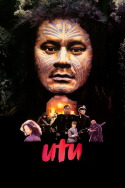
A brilliant epic of British colonialism in New Zealand and Maori rebellion, "Utu" has been languishing in obscurity for the past 25 years, and it's a damn shame. Not only is it a history lesson, a badass revenge story, a study of clashing cultures, and a study of the destructive nature of vengeance, the film ultimately coalesces into a truthful definition of "honor" itself. It's apropos, seeing how the Maori term "Utu" is another way to say "ritualized revenge against an enemy tribe in the name of preserving familial honor". You gotta love the efficiency of their language.
Despite clocking in at just under two hours, "Utu" has a mythical and lyrical sweep all its own (including an overture!). Maori officer Te Wheke is fighting with the British Colonialists to eradicate rebellious tribes. When he discovers his home village, a tribe sympathetic to the Brits, freshly massacred with ruined buildings still smoldering, he immediately blasts the nearest limey and cries out to the heavens in his native tongue, declaring his utu and a unilateral war against the "pakeha" (white man). Then he gets some incredible facial tattoos and we're off and running.
Anzac Wallace, a nonactor, ex-con and former union leader, injects formidable energy into folk hero Te Wheke. A scene in a church, where he publicly declares his guerrilla war, is both grotesque and darkly comic, as Te Wheke is wearing his British-issue red coat and cap as well as boasting facial tats and holding a massive tomahawk; his inner duality is visualized as well as delivering his personal commentary on "pakeha savagery". He quickly becomes a Messianic figure with an army of his own, committing acts of destruction and chaos and inadvertedly becoming a mirror of the oppressive forces he rebels against. He becomes a target of his own, with Bruno Lawrence declaring his own utu of sorts as he descends into a unique sort of insanity (offset by the incredible weapon he invents). Te Wheke is reviled by all, least of all his own people, and in his repugnancy he achieves a purity of spirit.
Tons of action, a fast pace, and even a love story of sorts (which may be the only stumbling block). There's even a hint of the old Kiplingesque jaunty adventures of yesteryear, with a young British officer whose left shoulder seems to be a bullet magnet. While there's no one we can completely root for, the kaleidoscopic viewpoints actually benefit the story instead of detracting from it. Te Wheke achieves the status of Instant Myth.
This review of Utu (1984) was written by Jessica B on 24 Jan 2009.
Utu has generally received positive reviews.
Was this review helpful?