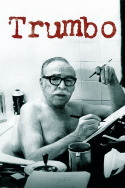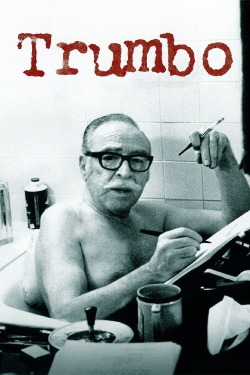
Review of Trumbo (2007) by Dave M — 30 Nov 2015
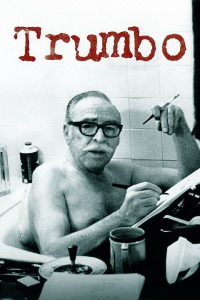
I'm having a moment. At least, that's what I was thinking when the credits rolled at the end of the biopic "Trumbo" (R, 2:04). You see, every year that I've been reviewing movies, I experience a moment in the last quarter of the year when I see the first movie that I'm absolutely sure will be nominated for the Best Picture Oscar in the upcoming awards season. That doesn't mean it'll win, or that nothing that came out earlier will be nominated or that I won't like something even better later in the year. It just means that, at that particular moment, I'm convinced a particular film is going to be nominated - and I haven't been wrong yet. In 2011, that moment came when I saw "The Artist", which went on to be nominated for Best Picture - and win. In 2012, it was "Argo" (another winner), in 2013 it was "Gravity" and in 2014 it was "The Imitation Game". Those last two didn't win the Oscar, but they did get nominated, and many people considered each among the strongest contenders for the big prize. Of course, I have no inside knowledge about what's going to happen during awards season and can't make any guarantees, but seeing "Trumbo" was my "moment" for 2015. My fellow Oscar fans just might want to make a note of it.
Bryan Cranston plays Dalton Trumbo, the Hollywood screenwriter who became the leader and most famous member of "The Hollywood Ten" - a group of writers who were blacklisted for their left-wing political beliefs. Trumbo had been a successful screenwriter since the mid-1930s and had served in World War II, but soon after that war, with the Cold War in its early stages, Trumbo's membership in the American Communist Party (officially, Communist Party USA) made him a target. He and nine other "radicals" who worked in the movie industry were called before the House Un-American Activities Committee. They were asked about their political beliefs, activities and associates. The Hollywood Ten each refused to cooperate and were all held "in contempt of Congress". Then, as if criminal charges weren't enough, these men (and many others after them), were put on an unofficial, but well-known list of writers, directors and actors who were labeled communists, making it all but impossible to find work.
Trumbo and his wife (Diane Lane) and three children had to move from their large house and plot of land north of Los Angeles to a more modest home surrounded by neighbors who... weren't exactly welcoming. Members of the blacklist suffered financial hardship, sometimes, as in the case of Arlen Hird (Louis C.K.), leading to health and/or family problems. Many others, such as actor Edward G. Robinson (Michael Stuhlbarg), who had associated with those on the list, were threatened with being blacklisted themselves, if they failed to cooperate with the ongoing search for communists among us. Meanwhile, big Hollywood names like actor John Wayne (David James Elliott) and gossip columnist Hedda Hopper (Helen Mirren) leaned on even more powerful people like studio head Louis B. Mayer (Richard Portnow) to make sure that those on the blacklist would remain shunned - both professionally and personally.
But Trumbo and his comrades found a way around the blacklist, at least one that would work for screenwriters. Desperate for money, Trumbo went to work for Frank and Hymie King (John Goodman and Stephen Root), writing scripts for the Hollywood equivalent of minimum wage. King Brothers Productions mostly made B-movies, but didn't mind dealing with blacklisted writers - working under pseudonyms. As talented as he was and as cheaply as he was working, Trumbo soon had more writing assignments than he could handle. He brought in some of his fellow blacklisted writers and became the quality control, reading all the scripts and doing rewrites when necessary. Trumbo turned this into a family business, especially for his oldest child, Nikola (played as a teenager by Elle Fanning), answering several different telephones for and secretly delivering scripts from writers who didn't exist.
The listees were making some money now and even having some (anonymous) critical success, but they yearned to write something different... something better. Hollywood power players like director Otto Preminger (Christian Berkel) and actor Kirk Douglas (Dean O'Gorman) came calling. Did this mean the period of the blacklist was ending, or was it just a case of more passengers boarding the Titanic? I'll never tell. Even while reviewing films based on true stories, I still avoid spoilers. If you want to know how it all turns out, you can read about it online, but I suggest you start your research with this movie!
"Trumbo" is one of the most entertaining educational experiences you'll ever get from a film. The acting is fantastic, with award-worthy performances from Cranston, Mirren and Stuhlbarg... at least. Although it's not a comedy, this film has many funny moments, thanks to director Jay Roach (veteran of the "Austin Powers" and "Meet the Parents" franchises). As wonderfully as Roach does helming his first big screen drama, John McNamara's script is even better. A movie about screenwriters should have an excellent screenplay, and this one does! As he adapts Bruce Cook's biography "Dalton Trumbo", the words that McNamara gives his disparate characters fit each perfectly and are a pleasure to listen to.
Between McNamara's script and Roach's direction, great scene follows great scene. The result is an informative, fascinating and very enjoyable lesson of courage, sacrifice and the choices we make, whether constructive or destructive. It's also a timely tale that should ring true for every generation, with none immune from unwarranted hysteria and the human proclivity to victimize those who think differently. I think "Trumbo" is one of the best movies of the year. But if you don't believe me, trust John Goodman. "Trumbo" is the third time that he has played someone in the movie business. The last two times were in "The Artist" and in "Argo". Just sayin'. Regardless of how I write it, "Trumbo" gets an "A+".
I'm having a moment. At least, that's what I was thinking when the credits rolled at the end of the biopic "Trumbo" (R, 2:04). You see, every year that I've been reviewing movies, I experience a moment in the last quarter of the year when I see the first movie that I'm absolutely sure will be nominated for the Best Picture Oscar in the upcoming awards season. That doesn't mean it'll win, or that nothing that came out earlier will be nominated or that I won't like something even better later in the year. It just means that, at that particular moment, I'm convinced a particular film is going to be nominated - and I haven't been wrong yet. In 2011, that moment came when I saw "The Artist", which went on to be nominated for Best Picture - and win. In 2012, it was "Argo" (another winner), in 2013 it was "Gravity" and in 2014 it was "The Imitation Game". Those last two didn't win the Oscar, but they did get nominated, and many people considered each among the strongest contenders for the big prize. Of course, I have no inside knowledge about what's going to happen during awards season and can't make any guarantees, but seeing "Trumbo" was my "moment" for 2015. My fellow Oscar fans just might want to make a note of it.
Bryan Cranston plays Dalton Trumbo, the Hollywood screenwriter who became the leader and most famous member of "The Hollywood Ten" - a group of writers who were blacklisted for their left-wing political beliefs. Trumbo had been a successful screenwriter since the mid-1930s and had served in World War II, but soon after that war, with the Cold War in its early stages, Trumbo's membership in the American Communist Party (officially, Communist Party USA) made him a target. He and nine other "radicals" who worked in the movie industry were called before the House Un-American Activities Committee. They were asked about their political beliefs, activities and associates. The Hollywood Ten each refused to cooperate and were all held "in contempt of Congress". Then, as if criminal charges weren't enough, these men (and many others after them), were put on an unofficial, but well-known list of writers, directors and actors who were labeled communists, making it all but impossible to find work.
Trumbo and his wife (Diane Lane) and three children had to move from their large house and plot of land north of Los Angeles to a more modest home surrounded by neighbors who... weren't exactly welcoming. Members of the blacklist suffered financial hardship, sometimes, as in the case of Arlen Hird (Louis C.K.), leading to health and/or family problems. Many others, such as actor Edward G. Robinson (Michael Stuhlbarg), who had associated with those on the list, were threatened with being blacklisted themselves, if they failed to cooperate with the ongoing search for communists among us. Meanwhile, big Hollywood names like actor John Wayne (David James Elliott) and gossip columnist Hedda Hopper (Helen Mirren) leaned on even more powerful people like studio head Louis B. Mayer (Richard Portnow) to make sure that those on the blacklist would remain shunned - both professionally and personally.
But Trumbo and his comrades found a way around the blacklist, at least one that would work for screenwriters. Desperate for money, Trumbo went to work for Frank and Hymie King (John Goodman and Stephen Root), writing scripts for the Hollywood equivalent of minimum wage. King Brothers Productions mostly made B-movies, but didn't mind dealing with blacklisted writers - working under pseudonyms. As talented as he was and as cheaply as he was working, Trumbo soon had more writing assignments than he could handle. He brought in some of his fellow blacklisted writers and became the quality control, reading all the scripts and doing rewrites when necessary. Trumbo turned this into a family business, especially for his oldest child, Nikola (played as a teenager by Elle Fanning), answering several different telephones for and secretly delivering scripts from writers who didn't exist.
The listees were making some money now and even having some (anonymous) critical success, but they yearned to write something different... something better. Hollywood power players like director Otto Preminger (Christian Berkel) and actor Kirk Douglas (Dean O'Gorman) came calling. Did this mean the period of the blacklist was ending, or was it just a case of more passengers boarding the Titanic? I'll never tell. Even while reviewing films based on true stories, I still avoid spoilers. If you want to know how it all turns out, you can read about it online, but I suggest you start your research with this movie!
"Trumbo" is one of the most entertaining educational experiences you'll ever get from a film. The acting is fantastic, with award-worthy performances from Cranston, Mirren and Stuhlbarg... at least. Although it's not a comedy, this film has many funny moments, thanks to director Jay Roach (veteran of the "Austin Powers" and "Meet the Parents" franchises). As wonderfully as Roach does helming his first big screen drama, John McNamara's script is even better. A movie about screenwriters should have an excellent screenplay, and this one does! As he adapts Bruce Cook's biography "Dalton Trumbo", the words that McNamara gives his disparate characters fit each perfectly and are a pleasure to listen to.
Between McNamara's script and Roach's direction, great scene follows great scene. The result is an informative, fascinating and very enjoyable lesson of courage, sacrifice and the choices we make, whether constructive or destructive. It's also a timely tale that should ring true for every generation, with none immune from unwarranted hysteria and the human proclivity to victimize those who think differently. I think "Trumbo" is one of the best movies of the year. But if you don't believe me, trust John Goodman. "Trumbo" is the third time that he has played someone in the movie business. The last two times were in "The Artist" and in "Argo". Just sayin'. Regardless of how I write it, "Trumbo" gets an "A+".
I'm having a moment. At least, that's what I was thinking when the credits rolled at the end of the biopic "Trumbo" (R, 2:04). You see, every year that I've been reviewing movies, I experience a moment in the last quarter of the year when I see the first movie that I'm absolutely sure will be nominated for the Best Picture Oscar in the upcoming awards season. That doesn't mean it'll win, or that nothing that came out earlier will be nominated or that I won't like something even better later in the year. It just means that, at that particular moment, I'm convinced a particular film is going to be nominated - and I haven't been wrong yet. In 2011, that moment came when I saw "The Artist", which went on to be nominated for Best Picture - and win. In 2012, it was "Argo" (another winner), in 2013 it was "Gravity" and in 2014 it was "The Imitation Game". Those last two didn't win the Oscar, but they did get nominated, and many people considered each among the strongest contenders for the big prize. Of course, I have no inside knowledge about what's going to happen during awards season and can't make any guarantees, but seeing "Trumbo" was my "moment" for 2015. My fellow Oscar fans just might want to make a note of it.
Bryan Cranston plays Dalton Trumbo, the Hollywood screenwriter who became the leader and most famous member of "The Hollywood Ten" - a group of writers who were blacklisted for their left-wing political beliefs. Trumbo had been a successful screenwriter since the mid-1930s and had served in World War II, but soon after that war, with the Cold War in its early stages, Trumbo's membership in the American Communist Party (officially, Communist Party USA) made him a target. He and nine other "radicals" who worked in the movie industry were called before the House Un-American Activities Committee. They were asked about their political beliefs, activities and associates. The Hollywood Ten each refused to cooperate and were all held "in contempt of Congress". Then, as if criminal charges weren't enough, these men (and many others after them), were put on an unofficial, but well-known list of writers, directors and actors who were labeled communists, making it all but impossible to find work.
Trumbo and his wife (Diane Lane) and three children had to move from their large house and plot of land north of Los Angeles to a more modest home surrounded by neighbors who... weren't exactly welcoming. Members of the blacklist suffered financial hardship, sometimes, as in the case of Arlen Hird (Louis C.K.), leading to health and/or family problems. Many others, such as actor Edward G. Robinson (Michael Stuhlbarg), who had associated with those on the list, were threatened with being blacklisted themselves, if they failed to cooperate with the ongoing search for communists among us. Meanwhile, big Hollywood names like actor John Wayne (David James Elliott) and gossip columnist Hedda Hopper (Helen Mirren) leaned on even more powerful people like studio head Louis B. Mayer (Richard Portnow) to make sure that those on the blacklist would remain shunned - both professionally and personally.
But Trumbo and his comrades found a way around the blacklist, at least one that would work for screenwriters. Desperate for money, Trumbo went to work for Frank and Hymie King (John Goodman and Stephen Root), writing scripts for the Hollywood equivalent of minimum wage. King Brothers.
This review of Trumbo (2007) was written by Dave M on 30 Nov 2015.
Trumbo has generally received positive reviews.
Was this review helpful?